
Why us
Geoscience makes sense where it happens: outside, at the rock, doing the work.
We run field courses for geoscientists in energy, water, hazards, government and academia, and for anyone curious about the ground under their feet. Our mission is simple: get people outdoors, learning, and sharing what they saw with others.
- 213
- industry field training courses personally run, and counting
- 0
- TRIR since founding in 2019
- 16
- years and counting of wilderness medical certification
- 24/7
- customer service, 365 days a year
01 Why the field. Why us.
The field is where geoscience clicks. We built a field school around it.
Why it works
Learning by doing
Doing beats listening.
Across 225 studies of college science and engineering courses, students in active-learning classes scored about 6% higher on exams. Students in lecture-only classes were 1.5 times more likely to fail.
The field
Geoscientists say the field is where it clicks.
89.5% of geoscience students, instructors and professionals surveyed at GSA meetings said fieldwork should be a required part of a geoscience degree. They ranked critical thinking and problem solving, core concepts, and field skills as the top things a field course teaches.
Preparation
Come prepared, learn more.
On a geology field trip, students who were made familiar with the setting beforehand gained significantly higher achievement and attitude levels than those who were not. Our course materials open one month before each course starts.
Health
Time outdoors lowers stress hormones.
City residents who spent time in a place that felt like nature saw the stress hormone cortisol fall faster than its normal daily decline. 20 to 30 minutes gave the most benefit for the time spent. In 24 forests across Japan, young adults had lower cortisol, pulse and blood pressure in the forest than in the city.
Source: Hunter, Gillespie & Chen, Frontiers in Psychology (2019) (opens in a new tab); Park et al., Environmental Health and Preventive Medicine (2010) (opens in a new tab)
Thinking
Four days out, more creative problem solving.
Backpackers on day four of an Outward Bound trip, with no phones, scored about 50% higher on a creative problem-solving test than a group tested the morning their trip began. University of Utah psychologist David Strayer calls it the “three-day effect.”
Source: Atchley, Strayer & Atchley, PLOS ONE (2012) (opens in a new tab); National Geographic, “This Is Your Brain on Nature” (2015) (opens in a new tab)
Built different
Safety
Field safety is our program.
Over a decade of geology-specific field course expertise. Built by an EMT. Highest safety standards since day one.
We set the standard. We invest in real field safety expertise.
Pricing
Simple pricing.
The price is the price: clear fee up front.
Local expertise
We're Texas-based.
We're in the country where most of the field trips happen. International trips get ground recon before any participant ever pays to come.
Local field leaders.
Customer service
Customer service 24/7, 365.
Flat structure. You write, we answer. Concept to boots on the ground in as little as 4 weeks.
Fast decisions. We stay lean, answer fast, and keep raising the bar.
Instructor IP
Instructors own their IP.
We help build and modernize their courses (tech, web, field tools), then profit-share. They own the science.
02 Expertise
Experts own the courses. A field safety professional runs the field.
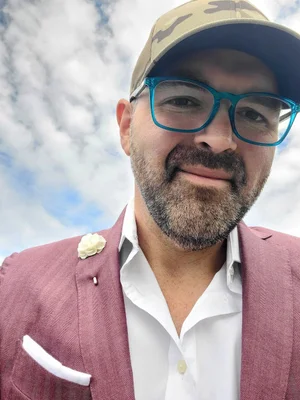
Christopher Oswalt
Founder & Director
16 years of outdoor risk management
Nationally Registered EMT (Emergency Medical Technician)4406-4805-4868
Former Global Field Safety Director for Nautilus/RPS across 100+ field courses worldwide.
Highlights
- 2019–presentFounder and Director, Geology Field School.
- 2014–2019Global Field Safety Director, Nautilus.
Raised the minimum medical training for staff from Wilderness Advanced First Aid to Wilderness First Responder. Added AEDs to the field kit list. Trained U.S. staff in on-road and off-road driving. Trained and reviewed global staff in group management, incident reviews, and skill development. Implemented a satellite communication and tracking system. Created an FCC-licensed radio communication program. Commissioned the NOLS audit. Advised against BS 8848 as an acceptable standard. Resigned in 2019 due to a difference of opinion on acceptable field risk management, and started Geology Field School.
- 2012–2014Lead Outdoor Instructor, REI Outdoor School.
Wilderness First Responder. Opened the Austin market. Built and taught Central Texas programming to the national Seattle curriculum.
- 2011–2014Lead Outdoor Ranger, Texas Parks and Wildlife.
Early on: AED, CPR, and Wilderness First Aid. Taught camping and ran family outdoor programs.
They own the rocks. We own the safety. You own the relationships.
We partner with the instructor and directly advertise their services. We help build and modernize their courses (tech, web, field tools), then profit-share. They own the science.
Instructors
Rene Jonk
Director, ACT-GEO
More than 25 years in geoscience characterization for exploration, development, and research. Honorary professor, University of Aberdeen.
Scotland · Lead instructorWest Texas · Lead instructorAínsa · Lead instructorKilkee · Lead instructorSan Diego · Co-instructorKanab · Instructor
Vitor Abreu
Co-founder, Bossa Energy · Advisor, ACT-GEO
AAPG’s inaugural international Distinguished Instructor (2006). 30+ years evaluating, risking, and/or drilling in 22 countries and 31 sedimentary basins.
Brandon Harper
Instructor
Brandon has more than 15 years of experience in industry and academic geoscience exploration, development, and research.
Lee F. Krystinik
Equus Energy Partners, LLC · AAPG President 2013–14
Clastic sedimentologist and stratigrapher who uses outcrop–subsurface integration to find oil and gas.
Rick Beaubouef
RTB Geoscience · Field guide author
Thirty years of subsurface integration. Author of the Inyan Kara field guide.
03 Safety
EMT-founded. Field safety is our first job.
We are the world experts on industry field course safety and field risk management. We send experienced staff to the field.
0TRIR to date since founding in 2019
213industry field training courses personally run, and counting
16 yrsand counting of wilderness medical certification
NREMTSix years as a nationally registered EMT
How we run it
Medical training
EMT-founded. EMT-directed.
Wilderness First Responder (WFR) is the minimum level of medical training required to manage a group on every GFS course, and we would never send a first-year certified WFR into the field. Emergency Medical Technician is the lowest level of medical training tied to a national standard and a license.
Field operations
Staff with purpose.
Our field staff are safety and group management first. Dynamic risk assessment, group management, and emergency response are the role, and it gets their full attention.
Equipment
Specific gear.
Every piece of equipment taken on a trip is specified for a reason, from the polymer composition of the throw lines to the architecture of the shell on our Petzl rock helmets. Redundant modes of communication in the field, specific radio bands for convoys.
Corporate systems
HSE bridge.
We have spent more than ten years putting wilderness risk management inside corporate HSE language via proprietary bridging systems and risk assessments.
How every GFS course runs
- EMT-founded. EMT-directed.
- WFR minimum on every GFS course.
- Kit specified for this work.
- Field staff whose first job is safety.
04 Pricing
Our price is on the page.
Prices are based on actual costs of transportation and lodging. On certain courses we offer two tiers of pricing to make courses more affordable.
Course fees
- San DiegoFeb 22–26 2027$9,499
- ScotlandApr 15–18 2027$5,800
- West TexasApr 26–30 2027$8,200Ammonite$6,700Crinoid
- Inyan KaraMay 10–15 2027 · Fall dates coming soon$9,995
- Rock Springs UpliftDates coming soon$8,499
- Aínsa, SpainOn Demand$8,200Ammonite$6,700Crinoid
- Kilkee, IrelandOn Demand$9,400Ammonite$7,900Crinoid
- Kanab, UTDates to be announcedSee course page
Two price points
Industry standard
Ammonite
- Premium hotels
- Usually 3 or 4 dinners included
- Premium SUVs or private coaches
- Geoscientist enrichment where available: museums, exhibits, parks
- Printed field manual
- Industry-leading safety, logistics & technology
- Elite instructor who owns their material and IP for the course
- 3-month course website access (opens 1 month before start): videos, readings, 3D models, digital Field Course Atlas, digital Field Guide Book & more
Not included
- Flights to and from course start
Essential
Crinoid
- Essential hotels
- Shared vans
- Basic lunches & some snacks
- Hotel breakfast if offered by the hotel
- Industry-leading safety, logistics & technology
- Elite instructor who owns their material and IP for the course
- 3-month course website access (opens 1 month before start)
Not included
- Dinners
- Printed field manual
- Premium hotels and SUVs
- Optional geoscientist enrichment
- Flights
3 ways to work with us
01 · Our portfolio
Built trips, ready to go.
Book the course, book your flight. Done.
See the trips02 · Custom internal
Custom internal trainings.
Company in-house. Name the instructor. We handle logistics, safety, and the details to exacting industry HSE standards.
Request private in-house03 · Instructors
Bolt us on.
Have a course? Bolt us on and become an instant top-tier course. The science is yours; we handle the field, registration, logistics, safety, and the small details.
Bolt us on
05 Value
What field days buy.
For managers, HR and engineering leads: a field course takes your people off the job for 4–5 days. Here is what research on hands-on training, active learning and fieldwork says that time buys, and how lectures, videos and other passive formats compare.
What the time buys
- Safer habits.In 95 studies of worker safety and health training, the more hands-on the method, the more people learned and the fewer accidents, illnesses and injuries followed. Burke et al. 2006 (opens in a new tab)
- Hands-on counts most when the stakes are high.When hazards were severe, highly engaging safety training was considerably more effective than less engaging training, for both safety knowledge and safety performance. Burke et al. 2011 (opens in a new tab)
- Better calls on uncertain data.When geoscientists interpreted one synthetic seismic image, only 21% found the right tectonic setting. In a later study, experts who checked that their answer was geometrically possible and could have formed that way were almost 3× as likely to be right. Checking ideas against rock is the daily work on our courses. Bond et al. 2007 (opens in a new tab) · Bond et al. 2012 (opens in a new tab)
- A crew that works together.Team training gave moderate gains in teamwork and team performance. On our courses, crews work each outcrop together. Salas et al. 2008 (opens in a new tab)
Versus passive learning
- Active learning beats lecture.Across undergraduate science and engineering courses, exam scores were about 6% higher with active learning. Failure rates were 21.8% with active learning and 33.8% with traditional lecturing. Freeman et al. 2014 (opens in a new tab)
- Feeling you learned is not learning.In introductory college physics, students randomly assigned to lectures felt they had learned more, but students taught with active methods actually learned more. Deslauriers et al. 2019 (opens in a new tab)
- Passive formats ranked last.In worker safety training, lectures, pamphlets and videos were the least effective methods for learning and for cutting accidents. Nearly all students who tried a virtual field trip said it could not, and should not, replace real field trips. Burke et al. 2006 (opens in a new tab) · Spicer & Stratford 2001 (opens in a new tab)
- Open online courses often go unfinished.In a large study of massive open online courses, the median completion rate was 12.6%. Jordan 2015 (opens in a new tab)
What you get back
- Deeper understanding.College students in nine-week, entirely field-based introductory geology courses made significantly greater gains in core geoscience concepts than students in comparable campus-based courses. Elkins & Elkins 2007 (opens in a new tab)
- Skills that carry over.Training carried over to the job more when people were motivated and their workplace supported using it. Blume et al. 2010 (opens in a new tab)
- Safer work practices.A review of 22 randomized trials found strong evidence that safety training changes what workers do. Robson et al. 2012 (opens in a new tab)
- Better attitudes.University students’ attitudes grew more positive after a residential field class. Boyle et al. 2007 (opens in a new tab)
What time outdoors does for people
Creative thinking
The three-day effect.
Outward Bound backpackers tested on the fourth day of a wilderness trip, with no electronics, scored 50% higher on a creative problem-solving test than a group tested before their trip began. University of Utah psychologist David Strayer calls it the “three-day effect.”
Source: Atchley, Strayer & Atchley, PLOS ONE (2012) (opens in a new tab); National Geographic, “This Is Your Brain on Nature” (2015) (opens in a new tab)
Stress
Cortisol drops outdoors.
In an 8-week study of city residents, time in a place that felt like nature lowered the stress hormone cortisol 21.3% per hour beyond its normal daily decline, and 20 to 30 minutes gave the most benefit for the time spent. In a review of 22 forest-bathing studies, all but two found significantly lower cortisol after time in the forest, compared with a control group or with levels before.
Source: Hunter, Gillespie & Chen, Frontiers in Psychology (2019) (opens in a new tab); Antonelli, Barbieri & Donelli, International Journal of Biometeorology (2019) (opens in a new tab)
The evidence base
A movement built on research.
The Children & Nature Network, co-founded by Last Child in the Woods author Richard Louv, keeps what it describes as the world’s largest collection of peer-reviewed literature about nature’s benefits for children. The network says the research now available makes a compelling case that children with access to nature are healthier, happier and smarter.
Source: Children & Nature Network, Research Library (2026) (opens in a new tab)
06 Technology
Every course gets its own digital field kit.
Digital field kit
Course website
A dedicated participant page.
Pre-reading, relevant videos, a digital Field Course Atlas of the field stops, access to select 3D models, and where possible a secured digital copy of the course manual, along with course photos. Three months of access, opening one month before the course starts.
Field guide
Digital Field Guide Book.
Part of every course website, alongside the digital Field Course Atlas, videos and readings.
Field Companion app
The course in one tap.
The course app allows in-field measuring, easy group communication, and logistics and safety info in one tap. It includes an in-depth geological resource and low-resolution copies of 3D models from all over the world.
Drone models
Ours, and nowhere else.
High-quality drone models, flown and owned by GFS and not available anywhere else, with 3 months of participant access.
All drone flights are operated in accordance with the governing airspace regulations, land laws and permissions of each country.
3D outcrop viewer
Ainsa Quarry, Spain
Access to select 3D models is part of every course website.
The website
Always advancing.
We constantly innovate, integrate technology and advance field-based education.
07 Local and giving back
Texas-based. Part of the community.
Close to home
Local
We're Texas-based.
We're in the country where most of the field trips happen. Local field leaders. 24/7, and we can execute a trip in as little as four weeks’ notice.
Volunteer
Search, rescue and rodeo.
Christopher volunteers with Texas Search and Rescue (opens in a new tab) as a medic, drone pilot, search team member and support, and with the Houston Livestock Show and Rodeo (opens in a new tab) in the medical division and safety division.
The land
Respect for the land.
We bring geoscientists outside to look closely, learn, and treat the land and the people who own it with respect.
Geo-Hikes
Open hikes for everyone.
Open social geology hikes and backpacking led by Thomas L. Davis, PhD, through Geologic Maps Foundation. You do not need to be a geologist. Most events are free. A few longer trips are fundraisers, and donations to Geologic Maps Foundation may be tax-deductible. Geologic Maps Foundation / Geo-Hikes are not officially part of or affiliated with Geology Field School; we like them and what they do.
Geo-Hikes
08 E-Rocks
Geology for everyone.
Our mission is to bring geology to the people the field usually misses: people with disabilities (physical, learning and otherwise), learners facing cost barriers, and anyone who never had a way in.
E-Rocks is a geology learning program from Geology Field School, and we are working toward nonprofit status. It is designed to offer accessible ways to learn about rocks, landscapes and the science behind them: models you can explore on screen, learning materials you can touch, plain-language guides, and field days built around access.
Accessible by design
Access is built in from the start, not added later.
Many ways in
Designed so you can see it, touch it, hear it, read it in plain words, or come outside with support.
Grounded in field geology
E-Rocks comes from Geology Field School, which runs field geology courses.
Where E-Rocks stands: design work is underway, and our first accessible models and field days are being prepared.
Next step
Register interest or request in-house.
Open-enrollment weeks and private company weeks.