


Geology Field School exclusive
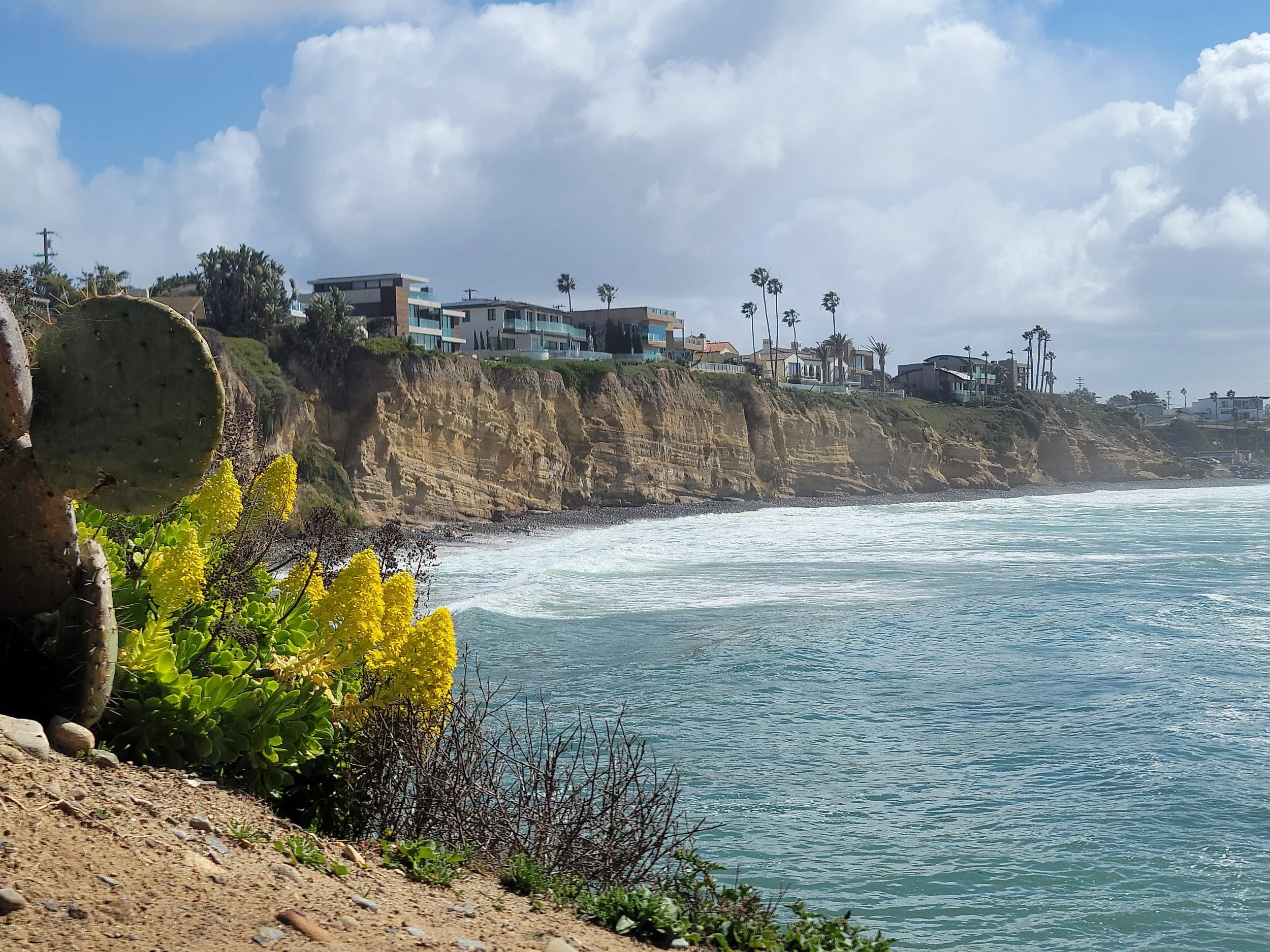
Reservoir architecture of deepwater systems — San Diego, California
Walk six California Borderland deepwater systems — canyon, channel, levee, and lobe outcrops — and carry lithofacies, stratal geometry, and N/G and connectivity calls back to your subsurface models.
- Feb 21–26 2027
- $9,499
- Included: La Jolla-area single lodging, charter-bus ground transport, hotel breakfasts, field lunches, two hosted dinners, and course materials. Not included: airfare and most dinners.
Course fees are billed in USD. GBP/EUR figures are mid-market references (live when available, otherwise approximate) - not a guaranteed charge currency. Flight averages are indicative only - not a quote. Flights and other travel to and from the course start are not included.
Technical
Deepwater lithofacies, stratal geometry, and reservoir prediction
Submarine canyons and deepwater channels are the primary conduits for reservoir-grade sediment from shelf to basin. Muddy sediments commonly associate with levees on the upper slope; sand-rich facies fill channels and lobes on deepwater fans — primary exploration targets.
The evolution of southern California includes many episodes of deepwater sedimentation — Paleozoic cratonic passive margin, Mesozoic forearc and arc settings, and Cenozoic transform, pull-apart, and continental borderland basins.
This 5-day course combines field activities with classroom lectures and exercises, with up to 80% of time in the field. Outcrop channel and lobe architecture is compared with high-resolution Pleistocene water-bottom datasets to improve reservoir prediction — N/G, quality, continuity, and performance.
What you work
- Cretaceous Point Loma Formation — lobe architecture, bedset continuity, scours
- Eocene sea cliffs north of Scripps — confined canyon / channel systems
- Tourmaline Surfing Beach — coastal deepwater transition / facies
- Cretaceous coastal exposures in La Jolla
- Capistrano Formation at San Clemente — laterally amalgamated channels
- Capistrano and Monterey sediments at Dana Point Harbor
- Deepwater lithofacies nomenclature, associations, and outcrop/core interpretation
Five problems this week solves
- Deepwater lithofacies names do not transfer cleanly from core to outcrop.Describe outcrops using appropriate deepwater lithofacies terminology.
- Stratal geometry is hard to tie to lithofacies in one wellbore view.Relate lithofacies to stratal geometries at channel, levee, and lobe scale.
- Key stratigraphic surfaces get missed when stacking is ambiguous.Identify key stratigraphic surfaces from geometries, lithofacies stacking, and associations.
- Environments of deposition are inferred without enough association criteria.Interpret environments of deposition from lithofacies associations, stacking, and diversity.
- 3-D reservoir facies distribution stays guesswork without outcrop and water-bottom analogs.Use outcrop, subsurface, and depositional models to predict 3-D distribution of reservoir facies.
Feb 21–26 · five field days on the California Borderland
- Sun 21Arrive SAN by 4:00 p.m. · intro 5:00 p.m. · dinner · safety
- Mon 22Point Loma coast · Cretaceous lobe architecture
- Tue 23Tourmaline · coastal deepwater transition / facies debate
- Wed 24La Jolla bluffs · confined canyon / channel systems
- Thu 25San Clemente · amalgamated Miocene channels
- Fri 26Dana Point wrap · depart after 2:00 p.m.
Sample week. Order can flex for swell and tide; specific stop details are on your participant website.
Built for deepwater reservoir practitioners
- Exploration geoscientists Risking canyon, channel, and lobe plays — need walkable architecture and recognition criteria.
- Development geoscientists Tying wells and seismic to deepwater facies architecture, N/G, and continuity.
- Geophysicists Linking seismic-scale channel and lobe geometries to outcrop lithofacies.
- Petrophysicists Calibrating log character to deepwater lithofacies and stacking.
- Reservoir engineers Need connectivity and performance framed on rock, not only on models.
- Managers sending a team Want a working understanding of deepwater reservoirs and a shared outcrop language.
Not for
- Tourists / general outdoors trips — this is an industry deepwater reservoir course, not a scenic coastal tour.
- Undergrad field camp — pitched to working geoscientists and engineers.
- Anyone not prepared for beach and bluff walking on tide-aware days.
Field staff

Vitor Abreu · Special guest instructor
Advisor, ACT-GEO · Co-founder, Bossa Energy
AAPG’s inaugural international Distinguished Instructor; Adjunct Professor at Rice (sequence stratigraphy after Peter Vail). After ExxonMobil exploration leadership he co-founded FLUXUS (2023) and Bossa Energy (2026). More than 30 years evaluating, risking, and drilling deepwater plays across 22 countries and 31 basins.

Rene Jonk · Instructor
Director, ACT-GEO
More than 25 years in geoscience characterization for exploration, development, and research. Technical advisor and leadership roles with ExxonMobil and Apache. Honorary professor, University of Aberdeen. Co-instructs lithofacies, architecture, and subsurface integration on this delivery.
Christopher Oswalt · Field lead · EMT
Geology Field School founder
Founder of Geology Field School. Field safety directors and EMT-qualified field staff run the week; Christopher often attends when schedule allows — not guaranteed on every course. Company founded on wilderness risk management. Nationally Registered EMT. Former Global Field Safety Director for Nautilus/RPS across 100+ field courses worldwide.
Why this week
Six deepwater systems, one coast
Point Loma to Dana Point — channel fills, lobes, and muddy levees in outcrop, paired with high-resolution Pleistocene water-bottom analogs.
Instructors own the science · vs classroom / catalog field schools
Vitor Abreu and Rene Jonk own the science (Staff); Geology Field School runs safety, logistics, and equipment. Exclusive delivery with ACT-GEO.
Exclusive 3D · Geology Field School exclusive
Geology Field School drone models of the La Jolla and Blacks Beach cliffs let you re-walk the architecture after the trip. See three interactive Sketchfab previews (drag to spin).
Safety
Field safety and readiness
How we run the week
- EMT and WFR-qualified field staff on the trip (field staff)
- Founded on the science of wilderness risk management and outdoor experience-based education
- Cutting-edge technology and the best safety equipment we can find that fits the purpose
- Sunday arrival includes a safety brief with dinner
- Tide- and swell-aware stop order on coastal days
- Hiking footwear mandatory
Fitness / readiness
Low physical demand. Field areas are at sea level in and around San Diego and La Jolla. Walks of up to 1 mile (1.6 km) most days; some wading on sandy beaches may be required. Longest walk ~1.5 miles (2.4 km) with a descent of about 370 ft (113 m) on a paved trail.
Who should not: anyone unable to walk on uneven beach, cobble, and bluff footing with the group.
Field conditions
Coastal southern California in February — cool mornings, sun on cliffs and beaches, wind on the coast. Tide and swell can reshape stop order. Layers, sun protection, and water every day.
Main hazards
- Charter-bus road time between San Diego and Orange County stops
- Cliff edges and falling-rock zones below bluffs
- Uneven beach, cobble, and wet-rock footing
- Tide timing and wave run-up on beach stops
- Sun exposure and cool coastal wind
Logistics
Travel, bases, and the package
Required travel
Participants book their own flights into SAN.
- Arrive by 4:00 p.m. Day 0 (Sunday Feb 21 2027) — introduction 5:00 p.m. plus dinner and safety brief.
- Do not book departure before 2:00 p.m. Friday Feb 26 2027.
If you miss the Sunday 4:00 p.m. group meet, you may miss the safety briefing and course frame the field days build on.
Gateway
San Diego International (SAN). Active public week: Feb 21–26 2027. Fall dates coming soon.
Charter-bus ground transport between the La Jolla base and stops is provided in-course.
One base all week — single-occupancy lodging in the La Jolla area, with field days running from the San Diego coast to Orange County (Point Loma, Tourmaline, La Jolla bluffs, San Clemente, Dana Point).
Core bonuses
- Hosted dinners — at least two group dinners in La Jolla (The Spot and George’s).
- Scripps Pier wrap — field discussion under the pier when tides allow.
Bring
- Sturdy closed-toe field shoes that can handle sand and wet beach (mandatory)
- Layers for cool coastal mornings
- Sun protection and water every day
- Notebook and any personal medication
- Travel insurance (recommended)
Course website, 3D models, technical materials, and field tools open 1 month before the course start date (about Jan 21 2027 for this Feb 21 start), with 3 months of website access.
Included
- Instruction with Vitor Abreu and Rene Jonk
- Field lead / EMT · Geology Field School safety and logistics
- Charter-bus ground transport
- La Jolla-area single occupancy lodging
- Hotel breakfasts and field lunches
- Two hosted dinners (The Spot and George’s)
- Course-specific field safety equipment
- Access to exclusive 3D drone models
- Participant course website and digital field kit (timing in access note above)
Not included
- Airfare to / from SAN
- Most dinners
- Personal field clothing and footwear
- Travel insurance (recommended)
AP / procurement
- Non-refundable $500 deposit holds a seat
- Then either 50% of balance due 1 day before start and 50% after the trip ends, or pay in full (preferred)
- Company card and PO accepted
- Colleague substitution until 14 days before start
- Cancellation terms
- Vendor pack on request (W-9, COI, sample invoice)
What you get
Your digital field kit
Course website, 3D models, technical materials, and field tools open 1 month before the course start date (about Jan 21 2027), with 3 months of website access.
- Course app
- Participant course website
- Field Course Atlas — map with 3D models
- Field Guide Book — PDF guidebook
- Exclusive 3D / drone models
- Deepwater TV-style walkthroughs
01Course app & course website
02Exclusive drone outcrop models
Geology Field School originals from this coast (La Jolla 3, Blacks Beach, La Jolla 2). CSV Sketchfab Link cells empty; UIDs verified from prior GFS embeds. Full models unlock with the participant kit (see Package).
La Jolla 3
Blacks Beach
La Jolla 2
03Certificate of attendance
You receive a Geology Field School certificate of attendance listing your instructional contact hours. For most professional geoscientists, in almost all states, those hours count toward professional-development (PDH) requirements. Use the listed instructional hours with your state board or employer PDH process.

Reviews & FAQ
What participants scored
Across San Diego company deliveries 2023–2025 — 70 reviews, combined overall 4.670 / 5.
Show more reviews
FAQ
Common questions
Who should not register — fit and fitness
Not for tourists, undergrad field camp, or anyone not prepared for beach and bluff walking on tide-aware days — see Who it’s for. Fitness is low: sea level, walks up to about 1 mile most days. Full readiness and hazards are in Safety.
Flights — gateway SAN
Book your own flights into SAN. Arrive by 4:00 p.m. Sun Feb 21; do not depart before 2:00 p.m. Fri Feb 26. Full travel rules in Logistics.
Lodging — single occupancy
La Jolla-area single occupancy for the whole week is in the package — see Bases & towns and Package.
Tides and day order
Coastal stops are tide-aware. This page shows the general stop areas; exact tide windows and day order live on the participant site after you register.
Payment / AP
$500 non-refundable deposit, then split balance or pay in full; company card / PO accepted. Full AP notes in Package.
Why $9,499?
Cost is based on local lodging and transportation prices and staffing costs. We don’t have a bloated international office staff structure or board of advisors to pay, so our overhead is low, our efficiency is high, and our prices reflect that.
Certificate / continuing-education hours
Your certificate of attendance lists your instructional contact hours — see Certificate for how those hours count toward PDH requirements.
After Sign up — materials unlock
Square receipt first, then participant credentials when the kit opens about one month before the start (around Jan 21 2027). Timing is in Package.
Fall dates
Fall dates coming soon. Inquire for specifics or an internal run — use Fall interest above for a written next step. The live registration gate on this page is the Feb 21–26 2027 public week.
Cancellation
See geologyfieldschool.com/cancellation for current terms.
In-house
Private company week
Same operating system. Your dates. 4–12 people. Your asset questions. Typical lead time 4–8 weeks.
Other industry field schools
Same operating system and safety standards across the catalog — Inyan Kara, Scotland, West Texas, Rock Springs, Aínsa, Ireland, and more.