

Southern Pyrenees
Deep-water Systems & Source-to-Sink
Sand-rich deepwater systems of the Pyrenean Foreland Basin — lithofacies, stratal geometries, sequence surfaces, and core–log–seismic integration on world-class Ainsa Basin outcrops, with an optional basin-scale source-to-sink theme.
- On demand · dates by inquiry
- Crinoid $6,700 · Ammonite $8,200
- Included: single lodging, ground transport, meals by tier (Crinoid: basic lunches, some snacks, and hotel breakfast if offered by the hotel; Ammonite: hotel breakfasts, field lunches and 3 hosted dinners), and course materials. Not included: airfare; all dinners on Crinoid; any dinner beyond the 3 hosted on Ammonite.
Course fees are billed in USD. GBP and EUR amounts are approximate conversions. Flight averages are a rough guide, not a quote. Flights and other travel to and from the course start are not included.
Technical
Deep-water depositional systems of the Pyrenean Foreland
Well-exposed rock of the Pyrenean Foreland Basins offers unique opportunities to observe sand-rich deepwater depositional systems. This ~5-day field seminar combines field activities with classroom lectures and exercises.
Field exercises focus on DW lithofacies descriptions, stratal geometries, and recognition of key stratigraphic surfaces. Participants describe core and integrate core and well-log information with seismic to generate high-resolution EoD maps.
An optional paired theme — Basin-scale Stratigraphy (source-to-sink) — covers continental-to-marine linkages in the Middle Eocene Pyrenean Foreland.
What you work
- DW lithofacies descriptions and associations
- Stratal geometries and stacking patterns
- Key sequence stratigraphic surfaces in outcrop, logs, and seismic
- Core and well-log EoD interpretation · geometry and connectivity
- Play-element recognition and fairway mapping
- Optional source-to-sink: shelf → slope → basin
Five problems this week solves
- Deepwater processes are hard to tie to reservoir architecture from logs alone.Relate DW sedimentological processes and erosion to reservoir architecture on outcrop.
- Lithofacies names do not translate cleanly into stratal geometry.Describe DW lithofacies and relate them to stratal geometries and stacking patterns.
- Key surfaces get missed when stacking changes are subtle.Identify key stratigraphic surfaces from lithofacies stacking changes in outcrop, logs, and seismic.
- EoD maps fail to predict reservoir performance.Interpret EoD from associations and diversity and map the implications for reservoir performance.
- 3-D facies distribution stays guesswork without analogs.Use outcrop analogues and depositional models to improve 3-D distribution of reservoir facies.
Five field days · themes
- Theme 1EoD & reservoir architecture · lithofacies associations
- Theme 2Sequence stratigraphic surfaces in outcrop, logs & seismic
- Theme 3Core & well-log EoD interpretation · geometry & connectivity
- Theme 4Play-element recognition & fairway mapping
- Theme 5Optional source-to-sink: shelf → slope → basin
Sample week themes. Day order and field stops are confirmed on your participant website once dates are set.
Built for deepwater subsurface practitioners
- Exploration & development geoscientists Need walkable deepwater analogues tied to core, logs, and seismic.
- Reservoir / geomodel teams Building connectivity and architecture models for sand-rich DW systems.
- Geophysicists Comparing seismic response of DW environments with outcrop.
- Asset & CCS teams Evaluating play elements and retention styles with outcrop-scale control.
- Managers sending a team Want a shared DW systems language across disciplines.
Not for
- Leisure or sightseeing trips — a technical week tying Ainsa slope channels and lobes to core, well logs and seismic; the Pyrenees supply the outcrop, not the agenda.
- Anyone who can’t walk on steep, uneven hillside, gully, and roadside ground at about 1,600–2,000 ft (490–610 m), in sun and changeable mountain weather.
Field staff

Rene Jonk · Lead instructor
Director, ACT-GEO
More than 25 years in geoscience characterization for exploration, development, and research. Technical advisor and leadership roles with ExxonMobil and Apache. Honorary professor, University of Aberdeen. Designs and teaches ACT-GEO partnership field courses.
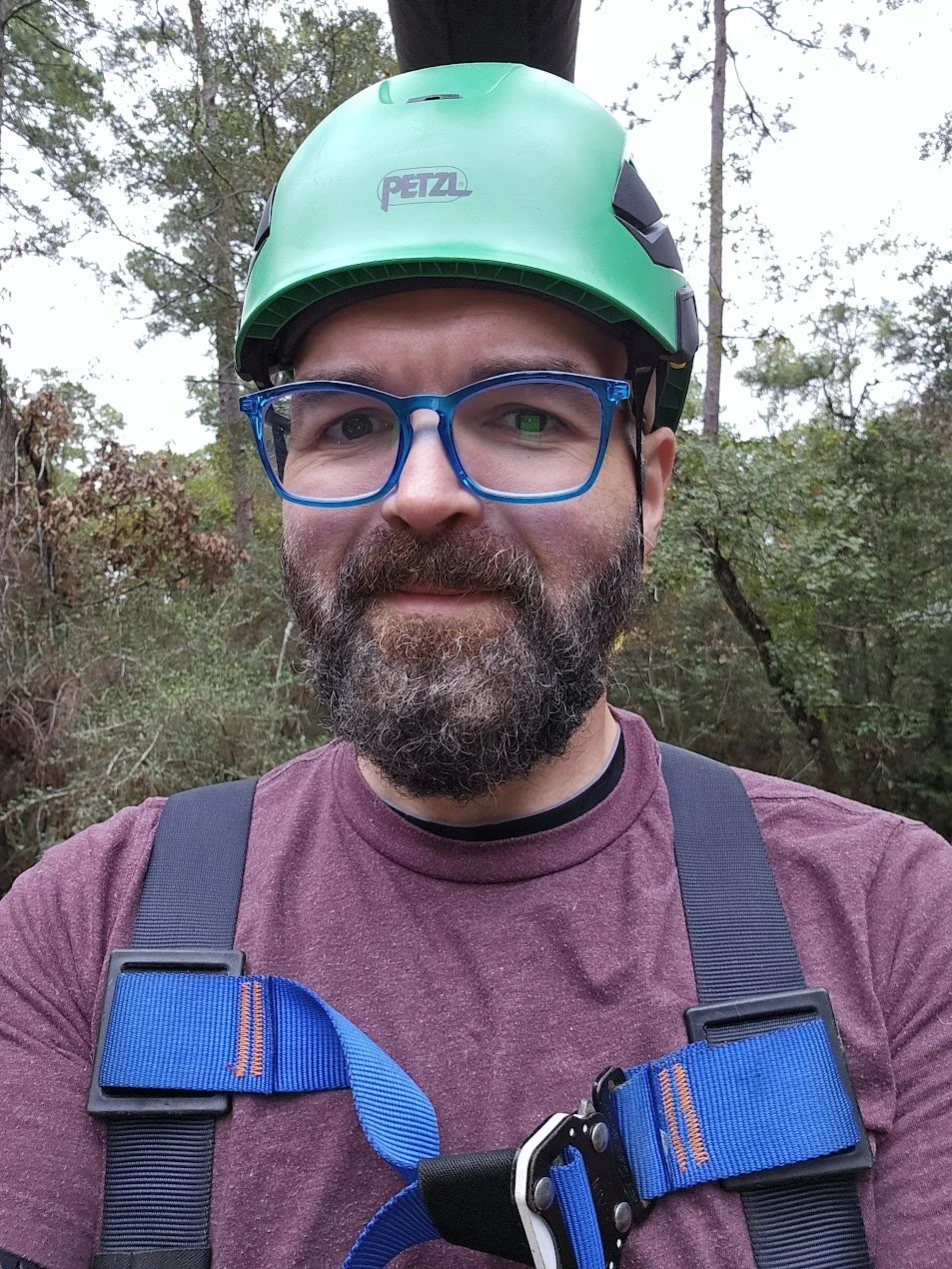
Christopher Oswalt · Founder · EMT
Geology Field School founder
Founder of Geology Field School, an EMT-led company. WFR-qualified field staff are on every GFS course at minimum; Christopher often attends when schedule allows — not guaranteed on every course. Company founded on wilderness risk management. Nationally Registered EMT. Former Global Field Safety Director for Nautilus/RPS across 100+ field courses worldwide.
Why this week
Pyrenean Foreland Basin
Sand-rich DW systems exposed at reservoir and seismic scale in northern Spain, with an optional shelf→slope→basin source-to-sink linkage.
Instructor owns the science
Rene Jonk owns the science (Staff); Geology Field School runs safety, logistics, and equipment. Offered with ACT-GEO.
Core–log–seismic habit
Course examples compare outcrop with subsurface datasets so EoD maps carry back to your asset.
Exclusive 3D models
Drone models of Ainsa Basin outcrops. See the interactive preview.
Why the field is worth the time
Hands-on beats passive. In 95 studies of worker safety and health training (20,991 people), more hands-on methods went with more learning and fewer accidents and injuries than lectures or videos.
Checking pays off. Of 184 experts reading one synthetic seismic section, the 18 who checked that their answer was geometrically possible and could have formed that way were almost three times as likely to be right. That checking is the daily work on the outcrop.
Skills carry over to the job more when people are motivated and their workplace supports using them (89 studies).
These studies looked at other workers and expert test-takers, not this course. We don't publish an ROI figure.
Sources: Burke et al., 2006, American Journal of Public Health · Bond et al., 2012, Geology · Blume et al., 2010, Journal of Management
Safety
Field safety and readiness
How we run the week
- WFR-qualified field staff on every GFS course (field staff)
- Founded on the science of wilderness risk management and outdoor experience-based education
- Cutting-edge technology and the best safety equipment we can find that fits the purpose
- Daily briefings and clear roles; conservative go/no-go calls
- Weather and terrain checks for hillside and roadside stops
- Hiking footwear mandatory
Fitness / readiness
Medium physical demand. Outcrops sit at about 1,600–2,000 ft (490–610 m). The Aínsa base is about 1,900 ft (580 m). The footing is uneven hillside, gully floors and roadside cuts.
Elevation / field conditions
Southern Pyrenees foothills, about 1,600–2,000 ft (490–610 m). Spring highs about 67°F (19°C), autumn about 73°F (23°C); cool mornings, showers possible, and UV up to about 8. Layers, sun protection, water, and boots every day.
- Spring (mid-April to mid-May): highs about 67°F (19°C), lows about 45°F (7°C), warm days about 77°F (25°C); rain on about 2 days in 5; UV about 6–8
- Autumn (mid-September to mid-October): highs about 73°F (23°C), lows about 50°F (10°C), warm days about 82°F (28°C); rain on about 1 day in 4; UV about 5–6
- Wind: usually light; typical gusts about 19–22 mph (30–36 km/h)
Main hazards
- Driving on mountain and secondary roads
- Slips and falls on uneven rock, marl, and scree
- Traffic at roadside stops (vests where directed)
- Sun exposure and variable weather
Logistics
Travel, bases, and the package
Required travel
Participants book their own flights into Barcelona (BCN).
- Arrival meet time and place are shared when dates are set.
- Book departure only after the published field wrap and transfer time.
Dates are on demand — register interest before booking flights.
Gateway
Barcelona (BCN) — Pyrenean Foreland / Aínsa corridor. Common European routing: Paris (CDG) to BCN.
In-course ground transport between the base and field stops.
The week runs from the Aínsa / southern Pyrenees corridor. Single occupancy lodging is included in both tiers; hotel class depends on tier.
Core bonuses
- Drone model evening sessions — when weather closes the outcrop, conference time with models and slides.
When schedule allows
Occasional extras — not every course includes these.
- Geology-related tours where available on Ammonite tier
Bring
- Hiking footwear (mandatory)
- Personal field clothing and layers
- Sun protection and water every day
- Travel insurance (recommended)
Course website, 3D models, technical materials, and field tools open 1 month before the course start date (once dates are set), with 3 months of website access.
Crinoid · essential
$6,700
Essential hotels, shared transport, basic lunches, some snacks, hotel breakfast if offered by the hotel, digital course manual. No dinners included.
Ammonite · premium
$8,200
Premium hotels, 3 hosted dinners, premium transport, geoscientist enrichment where available, printed manual.
Included
- Instruction with Rene Jonk (ACT-GEO)
- Field safety & logistics · WFR-qualified field staff · Geology Field School
- In-course ground transport
- Single occupancy lodging (tier sets property class)
- Meals by tier: Ammonite has hotel breakfasts, field lunches and 3 hosted dinners; Crinoid has basic lunches, some snacks, and hotel breakfast if offered by the hotel
- Course-specific field safety equipment
- Participant course website and digital field kit (timing in access note above)
Not included
- Airfare to / from BCN
- Dinners: none included on Crinoid; on Ammonite, any dinner beyond the 3 hosted
- Personal field clothing and hiking boots
- Travel insurance (recommended)
AP / procurement
- Non-refundable $500 deposit holds a seat once registration opens
- 50% of the course fee due at sign-up (deposit included); remaining 50% due no later than the first day of the course, or pay in full (preferred)
- Company card and PO accepted
- Colleague substitution up to 5 days before start ($100 per swap)
- Cancellation terms
- Vendor pack on request (W-9, COI, sample invoice)
What you get
Your digital field kit
Course website, 3D models, technical materials, and field tools open 1 month before the course start date (once dates are set), with 3 months of website access.
- Course app
- Participant course website
- Field Course Atlas — map with 3D models
- Course notes / manual (printed on Ammonite)
- Deepwater TV-style walkthroughs
01Course app & course website
02Exclusive drone outcrop models
Our drone model of Ainsa Quarry. Drag to spin; full models open with your participant kit (see Package).
Ainsa Quarry
Drag to spin
Sample 3D model
One sample from the drone models for this course. Drag to spin, or open it full screen.
High-res model video 1 — coming soon
High-res model video 2 — coming soon
03Certificate of attendance
You receive a Geology Field School certificate of attendance listing 40 instructional contact hours: 8 hours a day for 5 days. You can log them as 40 PDH. For most professional geoscientists, in almost all states, those hours count toward professional-development (PDH) requirements. Use the listed instructional hours with your state board or employer PDH process.

Reviews
Reviews
Aínsa course — 2 reviews, combined overall 5.000 / 5 (participant scores on a 6-point scale, converted to 5).
Reviews from this course will appear here after the first run.
Show all comments
FAQ
Common questions
Who should not register — fit and fitness
Not for anyone who can’t walk on steep, uneven hillside and gully ground at about 1,600–2,000 ft (490–610 m) in sun (UV up to about 8) — see Who it’s for. Readiness and hazards are in Safety.
Flights — gateway BCN
Book your own flights into Barcelona (BCN) once dates are set. Full travel notes in Logistics.
Lodging — single occupancy
Single occupancy in the Aínsa corridor in both tiers — see Bases & towns and Package.
Ammonite vs Crinoid
Ammonite ($8,200) adds premium hotels, 3 hosted dinners, premium transport, geoscientist enrichment where available, and a printed manual. Crinoid ($6,700) is essential hotels and shared transport with basic lunches, some snacks, and hotel breakfast if offered by the hotel, plus a digital manual. No dinners are included.
Which course is this?
ACT-GEO’s Deep-water Depositional Systems course (Ainsa Basin), with an optional Basin-scale Stratigraphy theme.
Payment / AP
$500 non-refundable deposit once registration opens, counted toward 50% of the fee due at sign-up; remaining 50% due no later than the first day of the course, or pay in full; company card / PO accepted. Full AP notes in Package.
Certificate / continuing-education hours
Your certificate of attendance lists 40 instructional contact hours (8 hours a day for 5 days) — see Certificate for how those hours count toward PDH requirements.
When are the dates?
On demand. Use Register interest and we let you know when a public week is set, or request a private in-house week.
Cancellation
See geologyfieldschool.com/cancellation for current terms.
Aínsa · Public seat
From $6,700
Crinoid $6,700 · Ammonite $8,200 · on demand · Registration opening soon
Rene Jonk, lead instructor; listed as instructor on N751 (NTA page, Nov 1, 2026).
- NTA course N751, Deep-Water Clastic Depositional Systems …, lists Aínsa on its itinerary.
- Partners: Geology Field School + ACT-GEO (Rene Jonk, Director).
- On site: RPS sends its own logistics and safety person. Experience varies, and some are new hires with little or no field experience. We send Chris Oswalt (NREMT) or a seasoned, qualified, GFS-approved field staffer, one of our 3 other WFRs, depending on the course.
N751 (Oct 18–22 2027): Fee From GBP £9,950, excl. tax, as published Nov 1, 2026 (opens in a new tab). Other NTA rates may apply. Ours: Crinoid tier USD $6,700 (single lodging, shared transport, lunches; no dinners). Programs, dates and inclusions differ. On-site staffing is our own account, based on our founder’s years at Nautilus/RPS and continuing contact with its staff. It is not an RPS statement.
Independent and proud of it: Geology Field School is not affiliated with or endorsed by Tetra Tech, RPS or the Nautilus Training Alliance.
In-house
Private company week
ACT-GEO’s Deep-water Depositional Systems course for your asset team, with Geology Field School safety and logistics. Your dates, your asset questions. Typical lead time 4–8 weeks.
Other industry field schools
Same safety standards and logistics across every course — Inyan Kara, San Diego, Scotland, West Texas, Rock Springs, Ireland, and more.