
Geology Field School exclusive
Rock Springs Uplift
Stop guessing Mesaverde continuity from sparse wells. Walk Rock Springs, Ericson, Blair, and Almond architectures that control tight-gas compartmentalization and reservoir prediction across the Greater Green River Basin.
- Dates coming soon
- $8,499
- Included (when the package locks): single lodging, ground transport, meals, and course materials. Not included: airfare.
Course fees are billed in USD. GBP/EUR figures are mid-market references (live when available, otherwise approximate) - not a guaranteed charge currency. Flight averages are indicative only - not a quote. Flights and other travel to and from the course start are not included.
Technical
Predictive siliciclastic sequence stratigraphy · Mesaverde
Greater Green River / Mesaverde teams still lose money when barrier–lagoon and fluvial architectures are mis-read as stacked sands on structure. Recent Almond and Ericson work shows compartmentalization, abrupt pinchouts, and facies-controlled deliverability that logs alone under-resolve.
This week puts those failure modes on outcrop: Rock Springs shoreface and coastal plain, Ericson / Blair fluvial–deltaic systems, low-accommodation Dakota–Muddy / Frontier end-members, and Almond barrier–lagoon–IVF architecture.
What you work
- Distributary vs compound IVF discrimination
- Net-transgressive barrier–lagoon compartmentalization (Almond)
- A/S ratio / tectonic control on fluvial style (Ericson · Moxa)
- Low- vs high-accommodation fluvial and shoreface end-members
- Blair deltaic–prodeltaic, slope channels, MTCs / event beds
- Outcrop → log/core language for Mesaverde reservoir risk
- Exclusive 3D / drone model review of key faces
Five problems this week solves
- Distributaries and compound incised-valley fills look similar on a single well — wrong architecture drives the wrong continuity and trap model.Discriminate distributary vs compound IVF architectures on outcrop and state the subsurface continuity / trap implication.
- Net-transgressive barrier–lagoon sets create layered shorefaces separated by bay-fill baffles, with pinchouts that can die in hundreds of meters.Predict reservoir compartmentalization in barrier–lagoon systems — pinchouts, ravinement, bay-fill baffles, tidal inlet / washover complexity.
- Ericson sheet-like lowstands vs multi-storey channel fills are hard to read from logs alone without A/S and tectonic context.Link tectonic unconformity / A/S ratio (Moxa-scale surfaces, Ericson members) to fluvial style.
- Low- vs high-accommodation fluvial and shoreface end-members blur correlation risk.Apply low- vs high-accommodation end-members (Dakota–Muddy / Frontier) to correlation risk and reservoir prediction.
- Tight-gas well performance often follows facies, paleostructure, and diagenetic history more than the present-day anticline map.Integrate outcrop architecture with log/core language to high-grade reservoir presence and quality risk in stacked Mesaverde plays.
Sun–Fri · SLC ↔ Rock Springs (dates TBD)
- SunSLC assemble · Echo Canyon / Frontier transect · arrive Rock Springs
- MonRock Springs Fm. shoreface + coastal plain · compound IVF
- TueEricson braided / sheet fluvial · Blair deltaic systems
- WedAlmond transgressive barrier / lagoon · valley fill
- ThuIntegration day · projected lowstand successions
- FriOptional wrap stops · depart toward SLC
Sample week from the May 2026 run. Specific stop details are on your participant website once dates lock.
Built for Mesaverde and analog practitioners
- Development geoscientists Working stacked coastal–fluvial reservoirs — need predictive siliciclastic sequence stratigraphy on rock.
- Exploration geologists Evaluating Greater Green River / Mesaverde and analog tight-gas or clastic plays.
- Reservoir / completion engineers Need facies architecture and baffles that control continuity, compartments, and well performance.
- Geophysicists Tying seismic and well data to walkable shoreface, fluvial, and barrier–lagoon geometries.
- Managers sending a team Want a shared outcrop model and a week that translates to everyday subsurface decisions.
- Company training leads Open enrollment or a private in-house week with Lee.
Not for
- Tourists / general outdoors trips — industry subsurface week, not a scenic geology tour.
- Undergrad field camp — pitched to working geoscientists and engineers.
- Anyone unable to walk about 1–2 miles on uneven Wyoming outcrop ground with elevation, wind, and UV exposure.
Discipline mix
Field staff
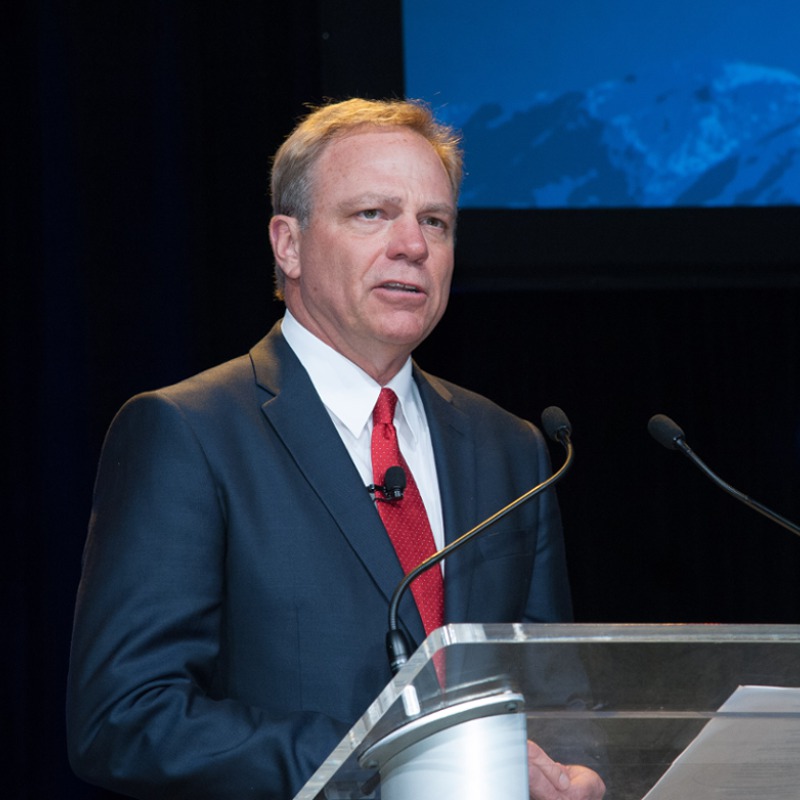
Lee F. Krystinik · Instructor
Equus Energy Partners, LLC · AAPG President 2013–14
Clastic sedimentologist and stratigrapher who uses outcrop–subsurface integration to find oil and gas. Designed and taught the May 2026 Rock Springs Uplift week. USGS → Reservoirs Inc. → Union Pacific Resources Chief Geologist → ConocoPhillips Global Chief Geologist → Fossil Creek Resources → Equus Energy Partners. Past President, SEPM · AAPG Distinguished Lecturer · Ph.D., Geology — Princeton University.
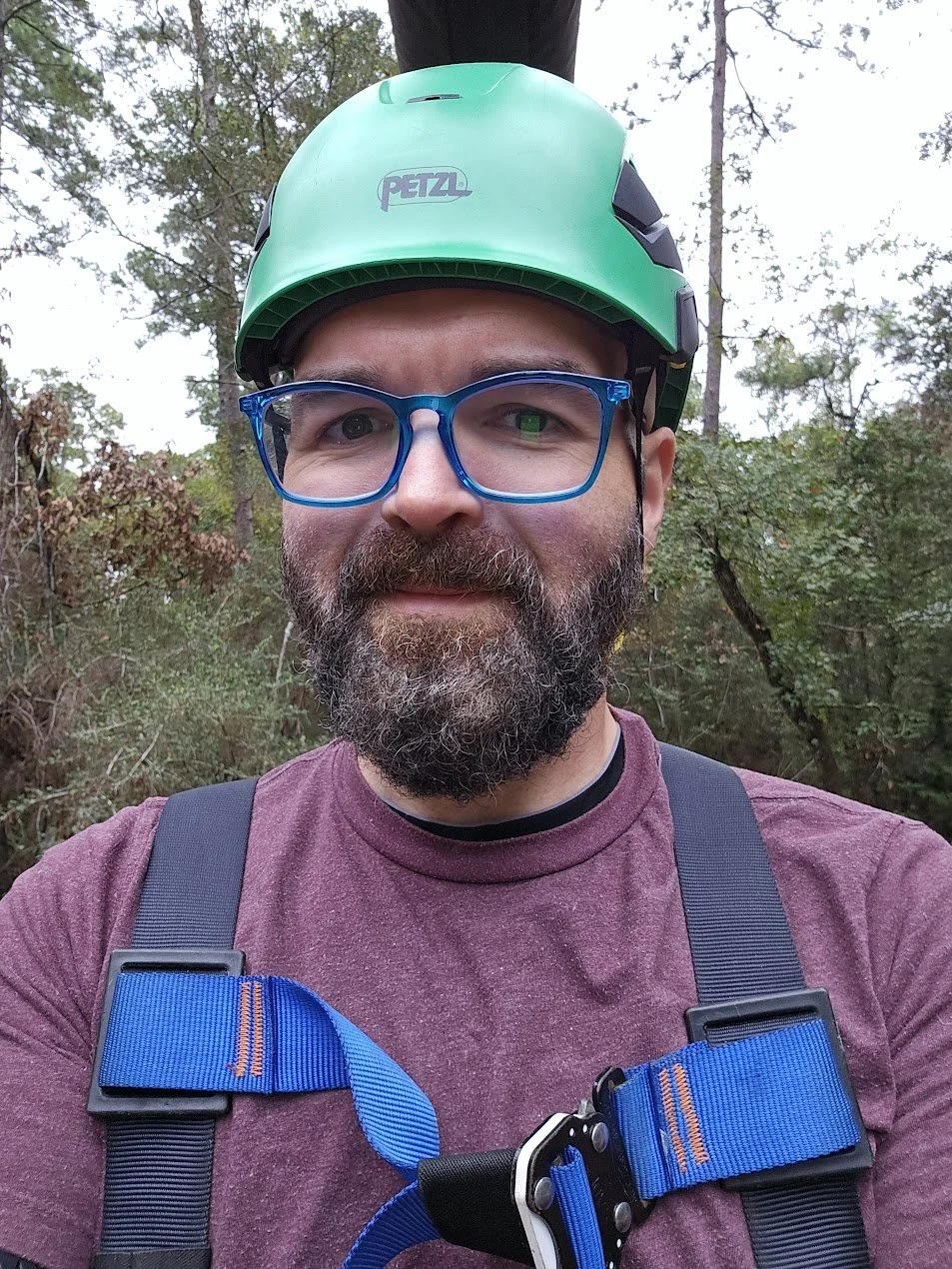
Christopher Oswalt · Field lead · EMT
Geology Field School founder
Founder of Geology Field School. Field safety directors and EMT-qualified field staff run the week; Christopher often attends when schedule allows — not guaranteed on every course. Company founded on wilderness risk management. Nationally Registered EMT. Former Global Field Safety Director for Nautilus/RPS across 100+ field courses worldwide.
Why this week
Walkable Mesaverde architecture
The Rock Springs Uplift exposes Upper Cretaceous Rock Springs, Ericson, Blair, and Almond coastal–fluvial systems at walkable scale — the same prediction problems Mesaverde teams face in the Greater Green River Basin.
Instructor owns the science · vs classroom / catalog field schools
Lee F. Krystinik leads the geoscience (Staff); Geology Field School runs safety, logistics, and equipment.
Exclusive 3D · Geology Field School exclusive
Drone / photogrammetry models of Almond, Twin Rocks, quarry, and I-80 faces. See the model previews.
Safety
Field safety and readiness
How we run the week
- EMT and WFR-qualified field staff on the trip (field staff)
- Founded on the science of wilderness risk management and outdoor experience-based education
- Cutting-edge technology and the best safety equipment we can find that fits the purpose
- Wyoming uplift / roadside and trail operating procedures for Mesaverde field days
- Elevation, wind, UV, and weather awareness; layers and hydration every day
- Vests / helmets where directed (roadside pull-offs, steep approaches)
- Hiking footwear mandatory
Fitness / readiness
Medium physical demand. About 1–2 miles (1.6–3.2 km) on uneven outcrop ground with the group, including moderate elevation change, wind, and UV exposure.
Who should not: anyone unable to walk about 1–2 miles on uneven Wyoming outcrop ground with the group.
Elevation / field conditions
Rock Springs sits at ~6,400 ft (~1,950 m). High-desert wind, dry air, strong UV, and rapid weather shifts — spring/fall cold, summer thunderstorms possible. Layers, sun protection, water, and boots every day.
Main hazards
- Driving on highways and access roads (SLC ↔ Rock Springs corridor)
- Slips and falls on uneven rock, scree, and steep approaches
- Wind, UV, dry air, and elevation
- Rapid weather shifts and lightning
- Traffic at roadside stops (vests where directed)
Logistics
Travel, bases, and the package
Required travel
Participants book their own flights into Rock Springs (RKS) or Salt Lake City (SLC).
- Sample shape: Sunday assemble (often SLC) with a Frontier / Echo Canyon transect into Rock Springs.
- Friday optional wrap stops, then depart toward SLC. Book departure flights only after wrap + transfer time.
Exact meet times publish with dates. Flight averages above are reference only — airfare is not included.
Gateway
Rock Springs (RKS) is the local gateway; many itineraries use Salt Lake City (SLC) with a drive to Rock Springs. Dates coming soon.
In-course ground transport for assemble, base, and field days. Capacity 6 min · 18 max.
The week runs from a single Rock Springs base, with transit geology on the SLC corridor. Single occupancy lodging is included once the package locks.
Core bonuses
- Transit geology — Echo Canyon / Frontier transect on the assemble day when the week shape includes SLC.
- Drone model evening sessions — when weather closes the outcrop, conference time with models and slides.
When schedule allows
Occasional extras — not every run guarantees these.
- Optional Green River Fm wrap stops on depart day
- Evening synthesis with exclusive 3D models
Bring
- Hiking footwear (mandatory)
- Layers for wind and cold mornings
- Sun protection and water every day
- Travel insurance (recommended)
We provide
- Course-specific field safety equipment (vests and helmets where directed)
Full list in Included & payment.
Public seat
$8,499
Dates coming soon · Registration opening soon · no Square checkout yet.
Course website, 3D models, technical materials, and field tools open 1 month before the course start date (once dates lock), with 3 months of website access.
Included
- Instruction with Lee F. Krystinik
- Field lead / EMT · Geology Field School safety and logistics
- In-course ground transport (assemble, Rock Springs base, field days)
- Single occupancy lodging for course nights (Rock Springs area)
- Most meals · course materials
- Access to exclusive 3D drone models
- Participant course website and digital field kit (timing in access note above)
Not included
- Airfare to / from RKS or SLC
- Any unhosted dinners confirmed when the package locks
- Personal field clothing and hiking boots
- Travel insurance (recommended)
AP / procurement
- Deposit and balance schedule publish when registration opens
- Company card and PO accepted
- Colleague substitution until 14 days before start
- Cancellation terms
- Vendor pack on request (W-9, COI, sample invoice)
What you get
Your digital field kit
Course website, 3D models, technical materials, and field tools open 1 month before the course start date (once dates lock), with 3 months of website access.
- Course app
- Participant course website
- Field Course Atlas — map with 3D models
- Field Guide Book — PDF guidebook
- Exclusive 3D / drone models
- Deepwater TV-style walkthroughs
01Course app & course website
02Exclusive drone outcrop models
Geology Field School drone / photogrammetry models from the Rock Springs Uplift and transit corridor. Previews below; full models unlock with the participant kit (see Package).
03Course videos
Geology Field School clips from the May 2026 Rock Springs acquisition and transit corridor. Pick a channel.
04Certificate of attendance
You receive a Geology Field School certificate of attendance listing your instructional contact hours. For most professional geoscientists, in almost all states, those hours count toward professional-development (PDH) requirements. Use the listed instructional hours with your state board or employer PDH process.

Reviews & FAQ
What participants scored
Rock Springs Uplift deliveries — 9 reviews, combined overall 5.000 / 5.
Show more reviews
FAQ
Common questions
Who should not register — fit and fitness
Not for tourists, undergrad field camp, or anyone unable to walk about 1–2 miles on uneven Wyoming outcrop ground — see Who it’s for. Full readiness and hazards are in Safety.
Flights — RKS or SLC
Book your own flights toward Rock Springs (RKS) or via Salt Lake City (SLC). The sample week assembles Sunday and departs Friday toward SLC. Full travel rules in Logistics.
Lodging — single occupancy
Rock Springs-area single occupancy for course nights — see Bases & towns and Package.
What does the fee include?
Public fee is $8,499. The package covers lodging, ground transport, meals, materials, exclusive 3D, and 3-month website access — see Package. Dates coming soon.
Payment / AP
Deposit and balance schedule publish when registration opens; company card / PO accepted. Full AP notes in Package.
Certificate / continuing-education hours
About 40 hours of instruction on a full public week. Your certificate of attendance lists your instructional contact hours — see Certificate for how those hours count toward PDH requirements.
When are the dates?
Dates coming soon. Use Register interest and we notify you when the public week locks. Private in-house weeks are by inquiry.
Cancellation
See geologyfieldschool.com/cancellation for current terms.
Rock Springs Uplift · Public seat
$8,499
$8,499 · Dates coming soon · Registration opening soon
In-house
Private company week
Same operating system. Your dates. 6–18 people. Your asset questions. Typical lead time 4–8 weeks.
Other industry field schools
Same operating system and safety standards across the catalog — Inyan Kara, San Diego, Scotland, West Texas, Aínsa, Ireland, and more.