
Calgary & Canadian Rockies
Montney & Fine-Grained Reservoirs: Core to Outcrop
For geoscientists and engineers working the Montney, Duvernay and other tight, fine-grained reservoirs. Start on core in Calgary, then walk the same rocks in the Front Ranges with Per Pedersen to see the mechanical layering and fractures behind landing zones, frac height, well spacing and frac hits.
- On demand · dates by inquiry · best season June–October
- From about $9,000 per person
- Included: lodging, ground transport, field lunches and digital course materials. Not included: airfare.
Course fees are billed in USD. Other currencies are approximate conversions. Flights and other travel to and from the course start are not included.
Technical
Mechanical stratigraphy and fractures at well-pad scale
Cores are about 10 cm wide and kilometres apart. Horizontal wells and frac stages work at the scale of metres to kilometres. This course fills that gap with continuous outcrop of the same rocks.
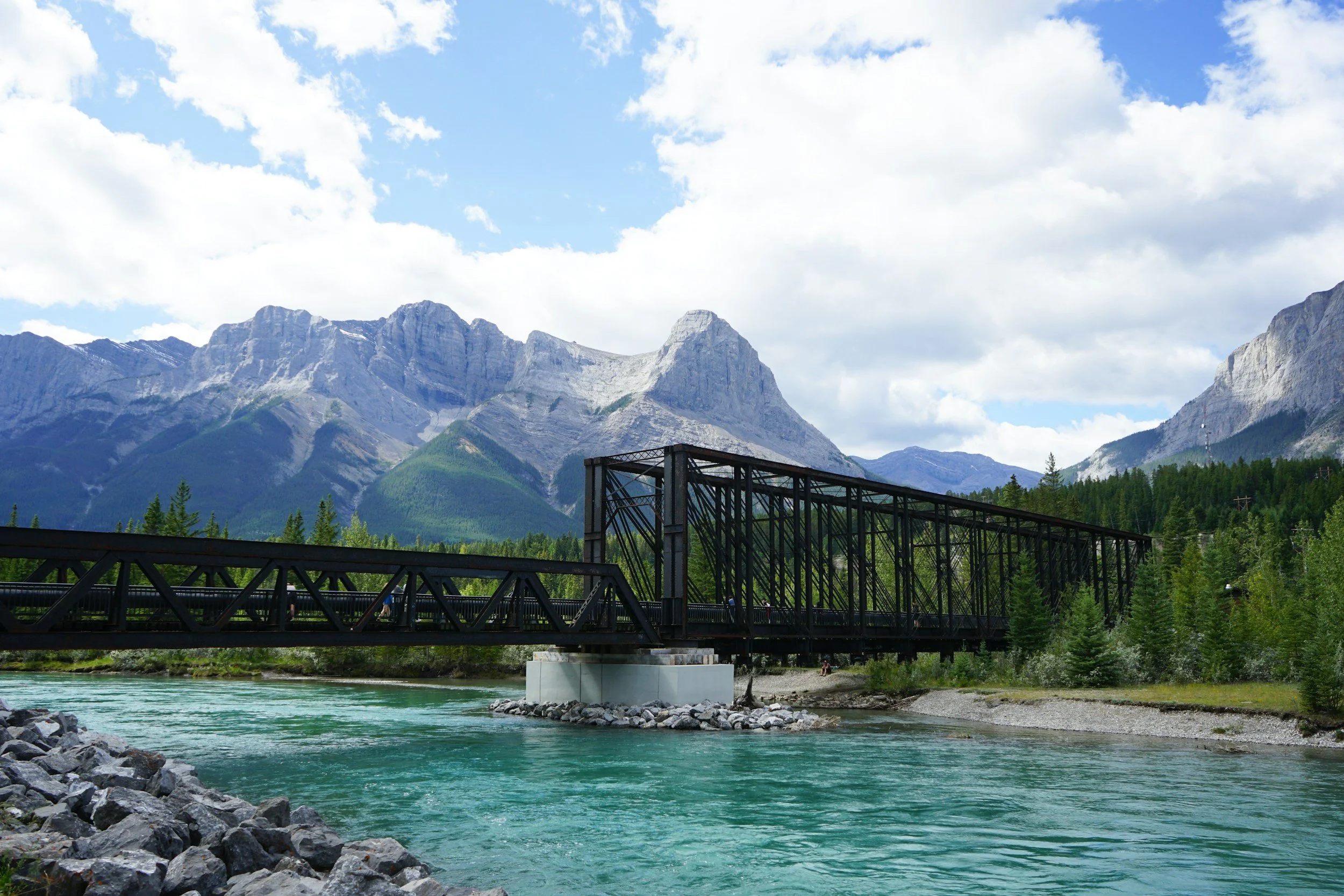
You start on core in Calgary to set up the play. Then you walk the Montney in the Front Ranges west of the city, from basin-floor turbidites up through slope, shelf and shoreface. The high point is Evan Thomas Creek in Kananaskis: a rock wall about 1.5 km long and 200 m tall, the scale of a horizontal well and pad.
On that wall you can see facies, fabric and fractures change along a well path, and talk through landing zones, well spacing, frac hits and shear zones on the rock itself. Every run is built around your team: your formations, your wells, your case studies.
What you work
- Bedforms and depositional processes in mudstones and siltstones
- Mechanical units: where fractures stay in one bed and where they cross
- Fracture stratigraphy: fabric vs fracture height, length and intensity
- Outcrop–core–log ties, with microseismic, seismic and completion data
- Landing zones and well spacing in stacked fine-grained reservoirs
- Shear zones and faults, and what they mean for frac hits and seismicity
Field photos from the Kananaskis and Canmore stops will be added here with Per’s approval.
Built for tight-reservoir teams in the Montney, Duvernay and beyond
- Development geologists Picking landing zones and mapping heterogeneity between wells.
- Completions engineers Want to see what controls frac height and where fractures stop.
- Reservoir engineers & geomodelers Upscaling core and logs to pad-scale models and spacing decisions.
- Geophysicists Tying microseismic, seismic and fracture orientation to the rock.
- Geomechanics & seismicity specialists Working on frac hits, shear zones and induced seismicity.
- Managers sending a team Want geology and engineering looking at the same rock and using the same words.
Not for
- Leisure or sightseeing trips — a technical week tying Montney outcrop to core, logs and completions; the Rockies supply the outcrop, not the agenda.
- Anyone who can’t manage one long field day: Evan Thomas Creek is about 8 km with 200 m of gain, partly along a gravel creek bed.
Five problems this week helps with
- Frac height and landing-zone calls rest on logs alone, without seeing how bed fabric controls fractures.Map mechanical units on the outcrop and see where fractures stay in one bed and where they cross several metres.
- Facies and fracture changes along a lateral are hard to picture from 10 cm of core.Walk a 1.5 km wall at well-pad scale and track how facies, fabric and fractures change along a well path.
- Well spacing and frac hits in stacked benches are hard to explain.Talk through stacked landing zones, spacing and frac hits on the rock, with your own pad layouts.
- Shear zones and faults show up as frac hits, casing problems or induced seismicity.See shear zones and fault-related fractures in outcrop and relate their orientation to stress and well direction.
- Core, logs, microseismic and production data don’t add up to one picture.Tie the outcrop back to Montney and Duvernay core and logs, and finish with a discussion of what it means for well performance.
Five days · sample flow
- Day 1Calgary core session: play setup and key Montney and Duvernay intervals
- Day 2Canmore and Kamenka Quarry: a near-complete Montney section, quarried bedding planes and natural fractures
- Day 3Evan Thomas Creek: the pad-scale Lower to Upper Montney wall · landing zones, spacing and shear zones
- Day 4Hood Creek and Ribbon Creek: Montney from base to shoreface · bedding-plane fracture exercise
- Day 5Highwood River or Burnt Timber Creek · wrap-up and what it means for your wells
Sample week. Length, stops and day order are set with your team and confirmed on your participant website once dates are set.
Add-ons, on demand
Add any of these to the field course, or book them on their own.
More field days
- Highwood River — shorefaces, fluvial channels and, if wanted, a source rock and the petroleum system (1 day)
- Burnt Timber Creek — the Cretaceous foreland basin from the Cadomin to the Cardium in one creek section (1 day, some wading)
- Grande Cache — the Deep Basin succession from the Nikanassin to the Cardium (multi-day)
Core workshops in Calgary
- Montney, Duvernay, Cardium, Viking, Bakken and Second White Specks
- Shoreface, fluvial and shale-process core sets
- Fracture stratigraphy and rock mechanics, in the field or classroom
Classroom & talks
- Classroom courses (1–2 days): mudstone processes, light oil play types, sequence stratigraphy, shale plays from outcrop to subsurface
- Lunch talks: the “not so monotonous” Montney, fracability in the Cardium, Montney facies and stacking
- Guest experts on request
Field staff

Per Kent Pedersen · Instructor
Professor, Department of Earth, Energy, and Environment, University of Calgary
Per is Associate Head (Graduate) in his department. He earned his BSc, MSc and PhD in geology at Aarhus University in Denmark. Before joining the University of Calgary in 2008 he worked at the Saskatchewan Geological Survey and as an exploration geologist in industry. He co-leads the Tight Oil Consortium with Chris Clarkson, studying reservoir heterogeneity and how sedimentary fabric controls fractures, and has run industry core workshops and field trips for more than 15 years.
Christopher Oswalt · Founder
Geology Field School founder
Founder of Geology Field School. GFS runs safety and logistics on this course. Christopher often attends when schedule allows — not guaranteed on every course.
Why this week
Montney at well-pad scale
Continuous Montney-equivalent outcrop in the Front Ranges, an hour or so from the Calgary core labs.
Instructor owns the science
Per Pedersen owns the science (Staff); GFS runs safety and logistics.
Core–outcrop habit
The week opens on core and ends on your wells, so what you see on the wall carries back to the asset.
3D models
Drone models of the Montney outcrops are planned where permissions allow.
Why the field is worth the time
Hands-on beats passive. In 95 studies of worker safety and health training (20,991 people), more hands-on methods went with more learning and fewer accidents and injuries than lectures or videos.
Checking pays off. Of 184 experts reading one synthetic seismic section, the 18 who checked that their answer was geometrically possible and could have formed that way were almost three times as likely to be right. That checking is the daily work on the outcrop.
Skills carry over to the job more when people are motivated and their workplace supports using them (89 studies).
These studies looked at other workers and expert test-takers, not this course. We don't publish an ROI figure.
Sources: Burke et al., 2006, American Journal of Public Health · Bond et al., 2012, Geology · Blume et al., 2010, Journal of Management
Safety
Field safety and readiness
How we run the week
- GFS runs safety and logistics
- Daily briefings and clear roles; conservative go/no-go calls
- Weather, creek-level and terrain checks before each stop
- Bear awareness on every field day
- Hiking footwear mandatory; shoes that can get wet for creek days
Fitness / readiness
Most stops are short walks under 1 km with little climbing. Evan Thomas Creek is the big day: about 8 km with 200 m of gain, partly along a gravel creek bed.
Elevation / field conditions
Front Ranges of the Canadian Rockies. The best season is June to October. Mountain weather changes fast, mornings can be cold, and snow is possible early and late in the season. Layers, rain shell, sun protection, water, and boots every day.
Main hazards
- Driving on mountain highways and gravel roads
- Traffic at roadside outcrops (vests where directed)
- Slips on wet rock, creek beds and loose ground
- Wildlife, including bears
- Cold water, changeable weather and sun
Logistics
Travel, bases, and the package
Required travel
Participants book their own flights into Calgary (YYC).
- Arrival meet time and place are shared when dates are set.
- Book departure only after the published field wrap and transfer time.
- Check Canada’s entry rules for your passport before you book.
Dates are on demand — register interest before booking flights.
Gateway
Calgary International (YYC). The core day is in Calgary; the field days run west into Canmore and Kananaskis.
In-course ground transport between the bases and field stops.
The week starts in Calgary for the core session, then moves to Canmore for the Rockies field days.
Core bonuses
- Evening sessions — your own pad layouts, logs and completion data set against the day’s outcrop.
When schedule allows
Occasional extras — not every course includes these.
- Lunch talk or guest expert (see Add-ons)
Bring
- Hiking footwear (mandatory)
- Shoes that can get wet for creek days
- Personal field clothing, warm layers and a rain shell
- Sun protection and water every day
- Travel insurance (recommended)
Course website, 3D models, technical materials, and field tools open 1 month before the course start date (once dates are set), with 3 months of website access.
Field course
From about $9,000
Per person. Core day in Calgary plus Rockies field days, lodging, ground transport, field lunches, digital course manual.
Add-ons
Quote
Extra field days, core workshops, classroom courses and talks, priced with your week.
Included
- Instruction with Per Kent Pedersen
- Safety and logistics run by Geology Field School
- In-course ground transport and park passes for field days
- Lodging
- Field lunches
- Course-specific field safety equipment
- Participant course website and digital field kit (timing in access note above)
Not included
- Airfare to / from YYC
- Personal field clothing and hiking boots
- Travel insurance (recommended)
What you get
Your digital field kit
Course website, 3D models, technical materials, and field tools open 1 month before the course start date (once dates are set), with 3 months of website access.
- Course app
- Participant course website
- Field Course Atlas — map with 3D models
- Digital course notes / manual
- Deepwater TV-style walkthroughs
01Course app & course website
02Drone outcrop models
Drone models of the Montney outcrops are planned where land and airspace permissions allow. Previews will appear here once they are ready.
03Certificate of attendance
You receive a Geology Field School certificate of attendance listing your instructional contact hours. For most professional geoscientists, in almost all states, those hours count toward professional-development (PDH) requirements. Use the listed instructional hours with your provincial association, state board or employer.

Reviews
Reviews
New course — no reviews yet.
Reviews from this course will appear here after the first run.
Show all comments
FAQ
Common questions
Who should not register — fit and fitness
Not for anyone who can’t manage one long creek-bed day (about 8 km, 200 m of gain) — see Who it’s for. Readiness and hazards are in Safety.
Is this only for Montney teams?
No. The Montney is the field example, but the questions — mechanical layering, fracture height, spacing, frac hits — apply to the Duvernay and other tight, fine-grained reservoirs. Core workshops can add the Duvernay, Cardium, Viking, Bakken or Second White Specks.
Can it be built around our wells?
Yes. Every run is built around your team: your formations, your wells, vertical or horizontal case studies.
Flights — gateway YYC
Book your own flights into Calgary (YYC) once dates are set. Full travel notes in Logistics.
Certificate / continuing-education hours
Your certificate of attendance lists your instructional contact hours — see Certificate for how those hours count toward PDH requirements.
When are the dates?
On demand, best June to October. Use Register interest and we let you know when a week is set, or request a private in-house week.
Cancellation
See geologyfieldschool.com/cancellation for current terms.
Calgary & Canadian Rockies · Field course
From about $9,000
Per person · on demand · add-ons by quote
In-house
Private company week
Per Pedersen’s core-to-outcrop week for your asset team, with Geology Field School running safety and logistics. Your dates, your wells, your questions. Typical lead time 4–8 weeks.
Other industry field schools
GFS runs safety and logistics — Inyan Kara, San Diego, Scotland, West Texas, Rock Springs, Ireland, and more.