
Southwest Montana
Bakken–Three Forks: Reservoirs, Seals & CO2-EOR
Walk the Montana outcrop equivalents of the Bakken and Three Forks with Steve Sonnenberg, and tie what you see to the questions Williston teams face now: landing zones and frac height, fracture pathways for gas and CO2 EOR, and the seals that storage projects depend on.
- On demand · dates by inquiry
- From about $8,995 per person · all inclusive
- Included: single lodging, ground transport, meals and course materials. Not included: airfare.
Course fees are billed in USD. Other currencies are approximate conversions. Flights and other travel to and from the course start are not included.
Technical
Bakken–Three Forks outcrops for today’s Williston questions
The Sappington and Three Forks formations of southwest Montana are the outcrop equivalents of the Bakken and Three Forks in the Williston Basin. This ~5-day field seminar combines outcrop days with classroom sessions and exercises.
Each day ties facies, fractures and seals to the calls Williston teams are making now: where to land a lateral, how far fractures grow, where injected gas or CO2 is likely to go, and whether a seal will hold over a storage site.
Montana rock is an analog, not a copy, of the basin-centre reservoirs. The week uses it for processes, facies and fracture styles, and carries each observation back to Williston core and logs in class.
What you work
- Sappington and Three Forks facies and flow units
- Fracture style and spacing by lithology
- Mechanical boundaries and frac-height controls
- Seal and baffle continuity at outcrop scale
- Outcrop–core–log ties to Williston wells
- Storage and EOR site-screening exercise
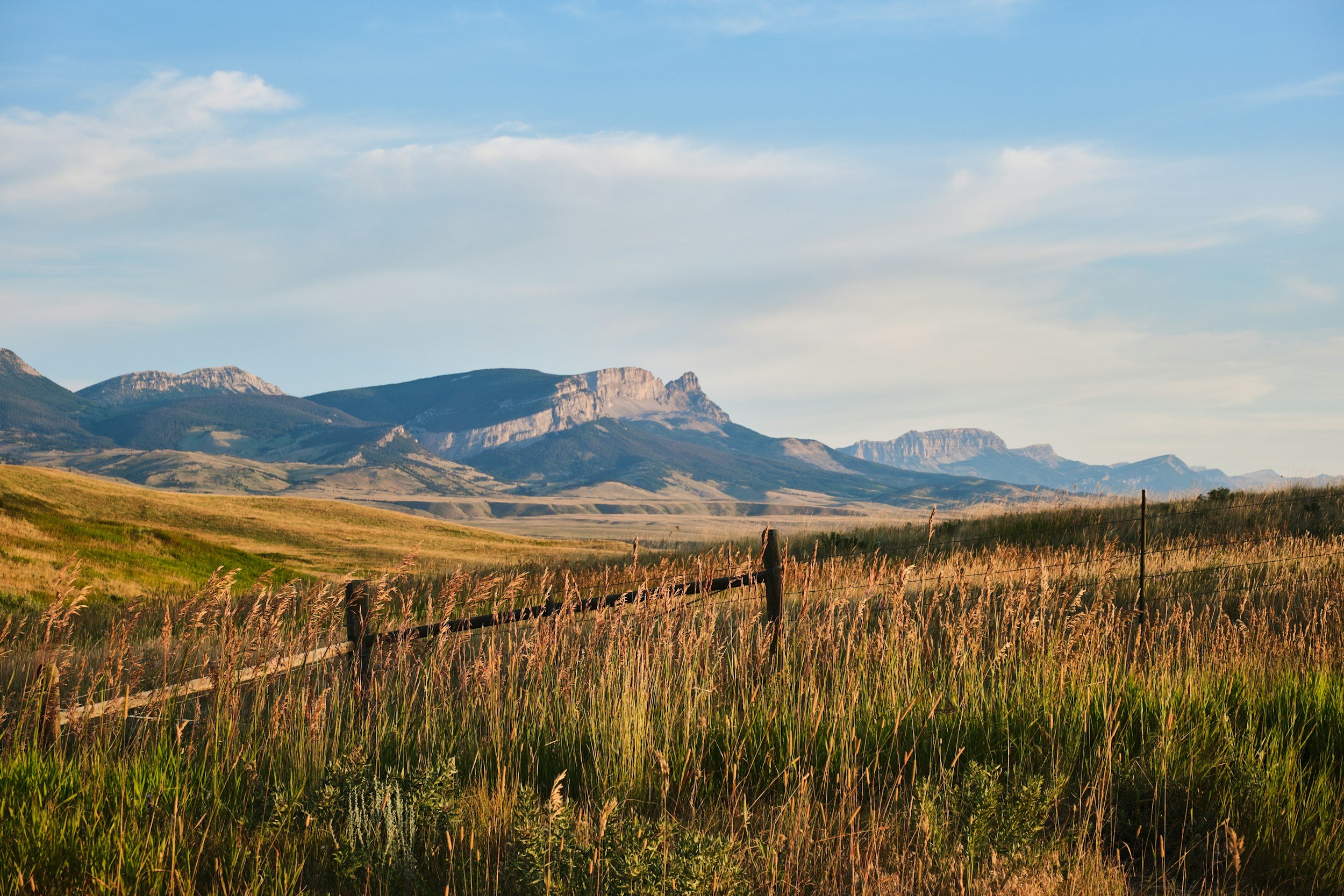
Field photos from the Montana stops will be added here after the scouting trip.
Built for Williston and CCS subsurface teams
- Bakken–Three Forks geoscientists Want the outcrop picture behind landing, spacing and completion choices.
- Completions & reservoir engineers Need to see what stops fractures, what lets them through, and how the network connects.
- CCS & storage teams Screening reservoirs and seals in the Williston and similar basins, including Class VI site work.
- EOR project teams Planning gas or CO2 injection in tight oil and working out where the injectant will go.
- Geoscientists moving into CCS Want a practical bridge from familiar plays to storage questions.
- Managers sending a team Want one shared language for the play across geology, engineering and storage.
Not for
- Leisure or sightseeing trips — a technical week tying Montana outcrops to Williston wells; the mountains supply the outcrop, not the agenda.
- Anyone who can’t walk on steep, loose canyon and hillside ground in summer sun and afternoon storms. One optional day is a high-effort mountain hike.
Five problems this week helps with
- Frac height and landing-zone calls lean on logs that don’t show where fractures stop.See how lithology and bed boundaries stop or pass fractures in the Sappington and Three Forks, and carry that to landing and spacing choices.
- Parent–child and infill results are hard to explain without a picture of the fracture network.Measure fracture style and spacing by flow unit, and talk through what depletion and stress do to new fractures.
- Gas and CO2 EOR can break through early along fractures, and conformance is hard to predict.Trace matrix and fracture pathways on the outcrop and discuss where injected gas is likely to go.
- Storage projects need seals that hold over kilometres, not just in one core.Walk fine-grained intervals laterally and look at what cuts them: fractures, faults and dissolution.
- Teams moving into CCS need to turn rock observations into a defensible site screen.Run a storage and EOR screening exercise that uses the week’s reservoir, seal and pathway observations.
Five field days · sample flow
- Day 1Classroom: the Williston Bakken–Three Forks system · Missouri Headwaters orientation stop
- Day 2Logan Gulch: Three Forks section · handheld gamma-ray profile tied to Williston logs
- Day 3Sappington (Bakken equivalent) near Milligan Canyon · Mission Canyon karst at Lewis & Clark Caverns
- Day 4Bridger Range Sappington section · fracture and facies mapping (lower-effort option available)
- Day 5Storage and EOR screening workshop · reservoir, seal and pathways · wrap-up
Sample week. Day order, field stops and access are confirmed on your participant website once dates are set. An optional Williston core day can be added.
Field staff

Steve Sonnenberg · Instructor
Professor and Charles Boettcher Distinguished Chair in Petroleum Geology, Colorado School of Mines
Steve led the Mines Bakken Research Consortium, which studied the Bakken petroleum system from the source beds to the reservoirs, and has also run consortia on the Niobrara and Vaca Muerta. He is a past president and Honorary Member of AAPG and received its Michel T. Halbouty Leadership Award. He earned his master’s at Texas A&M and his PhD at Colorado School of Mines. His work covers unconventional reservoirs, sequence stratigraphy and petroleum geology.
Christopher Oswalt · Founder · EMT
Geology Field School founder
Founder of Geology Field School, an EMT-led company. WFR-qualified field staff are on every GFS course at minimum; Christopher often attends when schedule allows — not guaranteed on every course. Company founded on wilderness risk management. Nationally Registered EMT.
Why this week
Bakken and Three Forks in outcrop
The Sappington and Three Forks are exposed in walkable canyon and mountain sections, with seal and karst examples in the same area.
Instructor owns the science
Steve Sonnenberg owns the science (Staff); Geology Field School runs safety, logistics, and equipment.
Outcrop–core–log habit
Each outcrop day ties back to Williston core and logs, so what you see carries to your wells and storage sites.
Exclusive 3D models
Drone models of the Montana outcrops are planned where permissions allow.
Why the field is worth the time
Hands-on beats passive. In 95 studies of worker safety and health training (20,991 people), more hands-on methods went with more learning and fewer accidents and injuries than lectures or videos.
Checking pays off. Of 184 experts reading one synthetic seismic section, the 18 who checked that their answer was geometrically possible and could have formed that way were almost three times as likely to be right. That checking is the daily work on the outcrop.
Skills carry over to the job more when people are motivated and their workplace supports using them (89 studies).
These studies looked at other workers and expert test-takers, not this course. We don't publish an ROI figure.
Sources: Burke et al., 2006, American Journal of Public Health · Bond et al., 2012, Geology · Blume et al., 2010, Journal of Management
Safety
Field safety and readiness
How we run the week
- WFR-qualified field staff on every GFS course (field staff)
- Founded on the science of wilderness risk management and outdoor experience-based education
- Cutting-edge technology and the best safety equipment we can find that fits the purpose
- Daily briefings and clear roles; conservative go/no-go calls
- Weather and lightning checks before canyon and ridge stops
- Hiking footwear mandatory
Fitness / readiness
Medium physical demand on most days: short walks from the vehicles onto steep, loose canyon and hillside ground. The optional Bridger Range day is high effort, about 3.5 mi (5.6 km) with roughly 1,900 ft (580 m) of climbing to about 9,500 ft (2,900 m). A lower-effort section is offered the same day.
Elevation / field conditions
Southwest Montana in summer: warm days, cool mornings, strong sun and afternoon thunderstorms. The Bridger Range day runs mid-July to September only. Layers, rain shell, sun protection, water, and boots every day.
Main hazards
- Driving on highways, gravel and ranch roads
- Slips and falls on loose rock, talus and steep slopes
- Lightning and fast-moving afternoon storms
- Wildlife, ticks and rattlesnakes; bear awareness in the mountains
- Sun, heat and dehydration
Logistics
Travel, bases, and the package
Required travel
Participants book their own flights into Bozeman (BZN).
- Arrival meet time and place are shared when dates are set.
- Book departure only after the published field wrap and transfer time.
Dates are on demand — register interest before booking flights.
Gateway
Bozeman Yellowstone International (BZN), about 25 miles (40 km) from Three Forks.
In-course ground transport between the base and field stops.
The week runs from Three Forks and Bozeman, close to the Missouri Headwaters. Single occupancy lodging is included.
Core bonuses
- Evening sessions — Williston core photos, logs and case studies set against the day’s outcrop.
When schedule allows
Occasional extras — not every course includes these.
- Lewis & Clark Caverns cave tour (seasonal)
- Optional Williston core day at the Wilson M. Laird Core and Sample Library, Grand Forks, North Dakota (add-on)
Bring
- Hiking footwear (mandatory)
- Personal field clothing, layers and a rain shell
- Sun protection and water every day
- Travel insurance (recommended)
Course website, 3D models, technical materials, and field tools open 1 month before the course start date (once dates are set), with 3 months of website access.
Public seat · all inclusive
From about $8,995
Per person. Single lodging, ground transport, meals, digital course manual.
In-house week
Quote
Your dates and your team, with the same package built around your wells or storage site.
Included
- Instruction with Steve Sonnenberg
- Field safety & logistics · WFR-qualified field staff · Geology Field School
- In-course ground transport
- Single occupancy lodging
- Meals during the course
- Course-specific field safety equipment
- Participant course website and digital field kit (timing in access note above)
Not included
- Airfare to / from BZN
- Personal field clothing and hiking boots
- Travel insurance (recommended)
What you get
Your digital field kit
Course website, 3D models, technical materials, and field tools open 1 month before the course start date (once dates are set), with 3 months of website access.
- Course app
- Participant course website
- Field Course Atlas — map with 3D models
- Digital course notes / manual
- Deepwater TV-style walkthroughs
01Course app & course website
02Exclusive drone outcrop models
Drone models of the Montana outcrops are planned where land and airspace permissions allow. Previews will appear here once they are flown.
03Certificate of attendance
You receive a Geology Field School certificate of attendance listing your instructional contact hours. For most professional geoscientists, in almost all states, those hours count toward professional-development (PDH) requirements. Use the listed instructional hours with your state board or employer PDH process.

Reviews
Reviews
New course — no reviews yet.
Reviews from this course will appear here after the first run.
Show all comments
FAQ
Common questions
Who should not register — fit and fitness
Not for anyone who can’t walk on steep, loose canyon and hillside ground in summer sun and storms — see Who it’s for. Readiness and hazards are in Safety.
Is Montana a direct analog for the Williston?
Not one-to-one. The Sappington is the closest outcrop match for the Bakken, and the Montana Three Forks differs from the basin-centre reservoir. The week uses Montana for facies, fractures and seals, and ties each stop back to Williston core and logs in class.
Is this a Bakken course or a CCS course?
Both. The same rocks answer completion and spacing questions and storage and EOR questions, and the last day brings them together in a screening exercise.
Flights — gateway BZN
Book your own flights into Bozeman (BZN) once dates are set. Full travel notes in Logistics.
Lodging — single occupancy
Single occupancy in Three Forks or Bozeman — see Bases & towns and Package.
Certificate / continuing-education hours
Your certificate of attendance lists your instructional contact hours — see Certificate for how those hours count toward PDH requirements.
When are the dates?
On demand. Use Register interest and we let you know when a public week is set, or request a private in-house week.
Cancellation
See geologyfieldschool.com/cancellation for current terms.
Bakken–Three Forks · Public seat
From about $8,995
Per person · all inclusive · on demand
In-house
Private company week
Steve Sonnenberg’s Bakken–Three Forks week for your asset or storage team, with Geology Field School safety and logistics. Your dates, your wells, your questions. Typical lead time 4–8 weeks.
Other industry field schools
Same safety standards and logistics across every course — Inyan Kara, San Diego, Scotland, West Texas, Rock Springs, Ireland, and more.