
Industry field school · exclusive
Rio Grande Rift
Make economic sense of rift complexity. Walk axial vs tributary fluvial systems, transfer-zone fairways, volcanic seismic false positives, and fault damage seals across the San Luis–Española–Albuquerque rift trio — taught by Lee F. Krystinik, assembling in Alamosa and finishing in Santa Fe.
- Dates: Coming soon — open enrollment or company block week
- Shape: Alamosa, Colorado assemble · multi-night Alamosa then Santa Fe, New Mexico · depart Santa Fe (Albuquerque backup)
- Who it is for: Geologists, geophysicists, and reservoir / completion engineers who need outcrop-calibrated prediction for rift and extensional-basin clastics — global analogs (Gulf of Suez, East African Rift, North Sea grabens) plus Rockies / New Mexico professionals needing an active-rift laboratory
- Type Section $10,540
- Instructor: Lee F. Krystinik · Field ops & safety: Christopher Oswalt
Why this week
The problems this course solves
Rifts often contain highly complex reservoir systems that make engineers pull their hair out. Teams lose money when axial and tributary fairways are swapped, when transfer zones jump the play, when volcanic bright spots are drilled as clastics, or when fault damage zones and diagenetically “dirty” sands defeat a layer-cake plan of depletion (POD). This week puts those failure modes on modern systems and outcrop — then ties them to drill, spacing, and completion choices.
1 · Axial vs tributary / reservoir–seal
Wrong genetic model for rift fill flips continuity, net-to-gross (NTG), and seal risk. Axial trunk belts migrate with accommodation; tributary lobes die into lake and mud. Channel-belt character changes along trend — well spacing and POD assumptions fail. Walk fans, aeolian localization, paleo–Rio Grande facies, and fault-scarp trenches before you pick the fairway.
2 · Transfer / accommodation zones
Segmented normal-fault arrays focus sand entry, traps, and migration at transfer zones — and segment fairways so successful wells do not simply step out along strike. Dry holes and wrong juxtaposition follow when correlation ignores the jump. The Alamosa→Santa Fe traverse puts a major transfer zone and reservoir-facies juxtaposition in context.
3 · Volcanic seismic false positives
Volcanoes, flows, dikes, and intrusions mimic clastic reservoirs as mounds and bright spots. Polarity errors and out-of-context drilling still burn dry-hole capital — even on modern 3D. Field time on volcanic centres, basalt dikes, and gorge-scale flows builds the in-context criteria you need before committing capital.
4 · Dirty sands & engineering models
Rift clastics can look texturally clean yet be diagenetically clay-rich, bioturbated, and lobate. Petrophysical cutoffs and layer-cake simulation grids fail; “frac harder” without fixing the conceptual model underperforms stages and breaks type curves. Walk the dirty-sand / deltaic-lobe / damage-zone succession and recalibrate the questions you ask of core and cuttings.
5 · Fault damage: seal, baffle, or conduit?
Basin-bounding and transfer faults are not simple planes. Damage zones alter porosity and permeability physically and chemically; mineralization on splays records paleo-fluid pathways. Misclassifying a zone as open conduit or perfect seal destroys compartment maps and injection / production plans. Outcrop makes the physical and chemical components visible.
Who this is for now
Asset and new-venture teams on global rift / lacustrine / syn-rift clastic projects — and Rockies / New Mexico professionals who need an active-rift depositional laboratory. Not a Permian stacked-bench course, and not a commercial Albuquerque oilfield development trip.
Audience
Who this week serves
This is a geology-first active-rift laboratory across San Luis · Española · Albuquerque. Geoscience fractions below follow the Lee earn matrix. Geology, Engineering, Completions, and Geophysics are earned. Geothermal is makeable (dashed) until Day-0 and Day-3/4 modules lock. Land, carbon capture and storage (CCS), and saltwater disposal (SWD) are omitted.
Shown mix: Geology 50% · Engineering 15% · Completions 10% · Geophysics 15% · Geothermal 10% · * = provisional until unlock checklist locks
- 50% Geol
- 15% Eng
- 10% Completions
- 15% GeoPhys
- 10%* Geotherm
Earned on the run-of-show
- Geology (50%) — Active-rift laboratory spine across San Luis · Española · Albuquerque: fans, aeolian, sabkha, axial vs tributary fluvial, lacustrine, evaporative sources, transfer zones, fault damage — continental depositional systems + structure.
- Engineering (15%) — N407 remodel already teaches fault-scarp → well spacing & plan of depletion (Day 2) and drainage/baffle POD wrap (Day 5). Split from Completions: this wedge is landing / spacing / POD on rift architecture.
- Completions (10%) — Day 4 dirty-sand / clay-rich facies → completion & engineering-model failure talk is named; fault damage zones fold into completion design (seals/baffles/conduits). Facies-tied completion choices are on-spine, not overlay padding.
- Geophysics (15%) — Named Day-4 volcanic seismic false-positives talk (igneous bright spots / polarity traps) plus limited well+seismic predictive frameworks LO and Gorge basalt scale intuition — GP is a primary buyer pain for this product.
Makeable (provisional)
- Geothermal (10% provisional) — Rio Grande Rift / San Luis Valley heat-flow and hydrothermal systems geology are genuine on-transect (elevated heat flow; Alamosa BHT stories; Valles/Jemez systems geology). Catalog LOs do not yet lock geothermal — needs Day-0 + Day-3/4 modules. Not a plant school; Lightning Dock lecture-only if used.
Omitted (no public fraction)
- Land — Transfer-zone fairways and well-count language stay geology/engineering. No acreage/lease/unit decision curriculum on the rift remodel; do not invent Land from play-fairway talks.
- carbon capture and storage (CCS) — Basalt CO2 mineralization (Taos / Carrizozo) and San Juan CarbonSAFE are research / adjacent-basin only — too thin / off-transect for a public wedge. Optional 5-min research-adjacency aside allowed without a CCS geoscience fractions.
- saltwater disposal (SWD) — No invented Albuquerque / Española / San Luis oilfield SWD. San Juan Class II / AoR material stays adjacent-basin only — transferable fault-damage risk language allowed without an SWD geoscience fractions.
Unlock checklist — lock provisional geoscience fractions
Dashed fractions above stay provisional until these teach-to-hit items land on Lee’s run-of-show. Complete sentences; no invented field stops.
- Geothermal: Day 0: 20–30 min SLV / Rio Grande Rift heat-flow brief (Alamosa No. 1 BHT; permeability = risk) Day 3 or 4: basalt / hydrothermal systems geology — Valles/Jemez as leased-closed / NPS-protected systems geology (teach systems, not ops) Optional 10 min Lightning Dock as southern-NM operating analog in lecture only (not a stop) Close each: heat-flow & hydrothermal geology on this transect — not plant tours
If Lee declines geothermal modules, omit Geothermal and republish lean mix. Lean mix would read: Geology 55% · Engineering 15% · Completions 10% · Geophysics 20%.
Instructors
Who leads the rocks
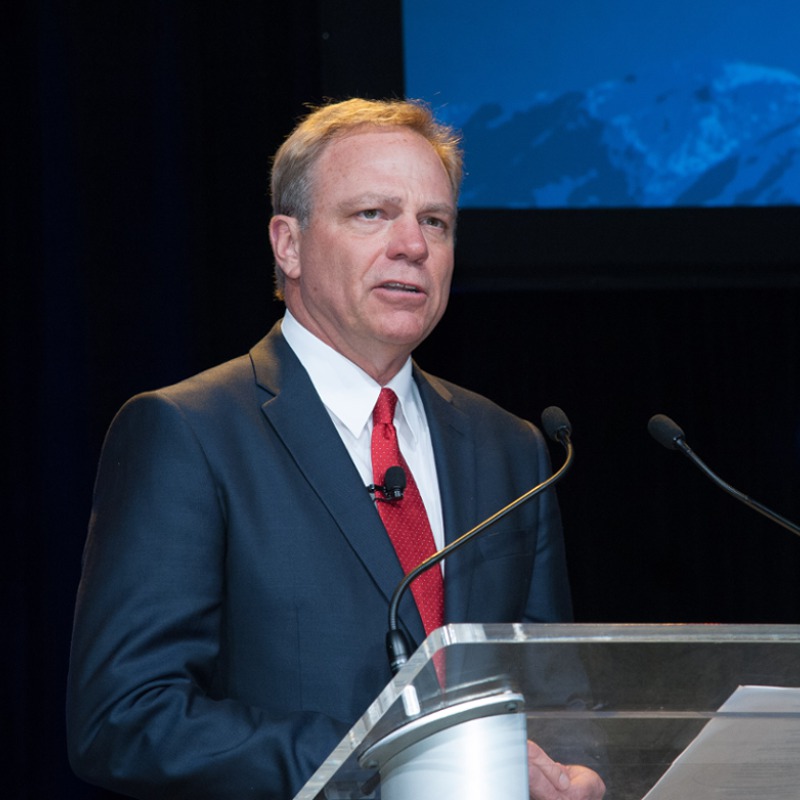
Lead instructor
Lee F. Krystinik
Equus Energy Partners, LLC
American Association of Petroleum Geologists (AAPG) President · 2013–14
- Past President, SEPM (Society for Sedimentary Geology)
- AAPG Distinguished Lecturer — North America & Latin America
- Ph.D., Geology — Princeton University
USGS → Reservoirs Inc. → Union Pacific Resources Chief Geologist → ConocoPhillips Global Chief Geologist → Fossil Creek Resources (sold ~2014) → Equus Energy Partners
Clastic sedimentologist and stratigrapher who uses outcrop–subsurface integration to find oil and gas. Leads the Geology Field School Rio Grande Rift week as sole instructor.
Field ops & safety
Christopher Oswalt
Field lead for Geology Field School — safety, logistics, and exclusive drone / photogrammetry so teaching stays on the rocks. Alamosa→Santa Fe overnight pattern and meeting-space lodging designed for a better participant week than legacy competitor patterns.
Science
Science frame
Laboratory
The Rio Grande Rift exposes modern and preserved continental systems across the San Luis, Española, and Albuquerque basins — alluvial fans and fan deltas, aeolian dune complexes and siliciclastic sabkhas, tributary and axial fluvial, lacustrine shoreline and deltaic, evaporative playas, transfer / lateral ramps, volcanic false positives on seismic, and fault damage zones — at walkable scale for global rift prediction.
Method
Each field day opens with a short conceptual lecture, then outcrop and modern-system work aimed at one prediction or depletion problem. Subsurface exercises (including correlation, well spacing, and POD) keep geo and eng in one conversation. Exclusive GFS drone models extend faces beyond the roadcut as datasets lock.
Five learning outcomes
- Outcome 1 — Discriminate axial vs tributary fluvial (and fan / aeolian / lacustrine) reservoirs in rift fills and state how that choice changes landing, well spacing, and plan of depletion.
- Outcome 2 — Predict reservoir presence, continuity, and trap styles across transfer / accommodation zones and basin-bounding fault systems from limited well and seismic control.
- Outcome 3 — Recognize volcanic and igneous features that create seismic “false positives,” and separate them from genuine clastic reservoir targets before drilling capital is committed.
- Outcome 4 — Evaluate fault damage zones as seals, baffles, or conduits — including diagenetic / mineralization clues — and fold those barriers into reservoir models and completion design.
- Outcome 5 — Construct predictive frameworks for rift petroleum systems (including evaporative / cyanobacterial sources and underfilled-lake seals) that transfer from the Rio Grande Rift laboratory to global extensional basins.
Outline
Course outline (theme-level)
Public summary of day themes adapted from the industry-standard rift / extensional-basin field laboratory (competitor N407 day architecture — benchmark only, not the sold product name). Stop minutiae and hotel names stay on ops docs. Overnight pattern: Alamosa first, Santa Fe second.
Arrive
Day 0 — Alamosa assemble · rift overviewField core
Days 1–5 — fans/aeolian/lakes · axial vs tributary · transfer traverse · volcanics & damage · margin wrapDepart
Day 6 — depart Santa FeDay 0 · Arrive Alamosa
Reception, safety, and rift tectonic + depositional overview — course objectives and why rifts matter economically (outcomes framing).
Day 1 · Fans, aeolian, sabkha, lakes
Alluvial-fan proximal→distal transect; Great Sand Dunes erg (transverse dunes, fan/fluvial interaction, volcanic-rich aeolian); playas, cyanobacterial mats, salt pans, Magadi-class evaporative sources; lacustrine shoreline / fluvial input (outcome 5).
Day 2 · Axial vs tributary
Correlation exercise; channel-belt variability; point-bar trench; paleo–Rio Grande quarry; marsh/peat marginal lacustrine; trenches along a major fault scarp — reservoir vs seal dilemma, well spacing, and POD (outcome 1).
Day 3 · Transfer traverse · Alamosa → Santa Fe
Full field-drive day south across two sub-basins and both margins; Rio Grande in different behavioural modes; Precambrian basement on margin; massive basalt and Rio Grande Gorge; major transfer zone and fault juxtaposition of reservoir facies (outcomes 2 & 3). Overnight shifts to Santa Fe.
Day 4 · Integrate model · volcanics · damage
Fault damage zone (physical/chemical seals and baffles); basin-bounding fault overview; pre-rift / syn-rift angular unconformity; basalt dike on a small transfer fault; volcanic centre and flows; fluvial/deltaic/lacustrine succession that looks clean but is diagenetically clay-rich — seismic false positives into the reservoir model (outcomes 3 & 4).
Day 5 · Field-scale apply · wrap
Modern and ancient margin facies; alluvial-fan traverse; major basin-bounding fault with copper mineralization on fault splays; tributary alluvial/fluvial vs braided axial Rio Grande; large-scale aeolian/fluvial/lacustrine traverse; field discussion and celebration (outcomes 1, 4 & 5).
Amenities
What’s included (high level)
- Instruction with Lee F. Krystinik
- Field ops & safety lead (Christopher Oswalt)
- Exclusive drone / photogrammetry models for participants (as datasets lock)
- Lodging in Alamosa then Santa Fe (or better), ground transport, and meals — package detail TBD before live fee card; classroom / meeting space is mandatory for the overnight bases (ops-level selection)
- Not included (typical GFS): airfare to Alamosa (ALS) / from Santa Fe (SAF); confirm unhosted meals when package locks. Albuquerque (ABQ) listed as depart backup on joining instructions.
Technical tease
Field data & models
Exclusive GFS drone / photogrammetry for Rio Grande Rift teaching faces (e.g. gorge, dunes, margin traverses) will be curated onto the participant Digital Field Atlas as datasets lock. Full interactive map stays on the ops page — public page gets stills / short reel once Brand clears assets.
Next step
Register interest
Dates are not live yet. Email for open enrollment interest or a company block week with Lee.