
Industry field school · exclusive
Powder River Basin
Stop fracking past geology. Walk Shannon–Sussex enigmas, Turner fringe-vs-core, Frontier preservation, and Niobrara vs Mowry systems that control today’s Powder River stacked-bench landing and parent–child risk — taught by Lee F. Krystinik, based in Casper, with exclusive Geology Field School drone models.
- Dates: Coming soon — open enrollment or company block week
- Shape: Casper assemble · Casper overnight base all week · eastern-margin faces as day trips (no Newcastle lodging)
- Who it is for: Geologists, geophysicists, petrophysicists, and completion engineers who need outcrop-calibrated drivers for PRB (Powder River Basin) tight-oil sandstones and Niobrara/Mowry hybrids — and transferable analogs elsewhere
- Type Section $10,461
- Instructor: Lee F. Krystinik · Field ops & safety: Christopher Oswalt
Why this week
The problems this course solves
PRB teams still lose money when stacked-bench laterals land in fringe facies, when Shannon/Sussex-class bodies are correlated as continuous sheets, or when Niobrara and Mowry are treated as one shale play. Sometimes the engineer cannot just hit it harder and frack past the problem. This week puts those failure modes on outcrop — then ties them to drill and complete choices.
1 · Fringe vs core / carrier-bed landing
Turner (and Parkman/Teapot) laterals land in thin, heterolithic, often low-contrast carrier-bed and halo facies where cutoffs fail. Exit pay into muddy bioturbated fringe → wasted lateral feet, weak EUR (estimated ultimate recovery), and stages that “frac harder” cannot fix. Walk continuous vs dying packages before you pick the bench.
2 · Isolated sandstone enigmas
Shannon and Sussex bodies change fast along strike. Wrong genetic model → wrong continuity story → wrong well count and completion. Outcrop shows the lateral death you cannot see in a type well.
3 · Frontier remnants
Synsedimentary tectonics and transgressive ravinement leave top-truncated Wall Creek / Frontier remnants — not continuous sheets. Mis-map a remnant as a continuous lowstand and laterals drill off the preserved thick.
4 · Parent–child & stacked benches
Parkman–Niobrara–Turner–Mowry columns under one lease amplify interference when fractures and faults are ignored. Shared geo/eng model on outcrop beats denser spacing alone.
5 · Niobrara ≠ Mowry
Two source / hybrid systems with different sedimentology, composition, and drill–complete issues. Treating them as one shale play is how sweet spots become money-disposal areas.
Who this is for now
Asset and delineation teams working today’s stacked PRB oil story (and companies hunting global analogs to isolated shelf sands and hybrid source-rock plays) — not a legacy CBM (coalbed methane) field trip.
Audience
Who this week serves
This is a geology-first Powder River Basin field school. Geoscience fractions below follow the Lee earn matrix. Geology, Engineering, and Completions are earned on the locked outline. Geophysics, Geothermal, carbon capture and storage (CCS), and saltwater disposal (SWD) are makeable overlays (dashed) until named modules lock. Land is omitted — we do not invent a landman curriculum.
Shown mix: Geology 50% · Engineering 15% · Completions 10% · Geophysics 10% · Geothermal 5% · CCS 5% · SWD 5% · * = provisional until unlock checklist locks
- 50% Geol
- 15% Eng
- 10% Completions
- 10%* GeoPhys
- 5%* Geotherm
- 5%* CCS
- 5%* SWD
Earned on the run-of-show
- Geology (50%) — Spine already earned: Shannon/Sussex/Parkman/Teapot/Turner/Frontier facies plus Niobrara & Mowry petroleum systems; fringe vs core; synsedimentary tectonics; Goldilocks RQ/diagenesis.
- Engineering (15%) — Outline already forces landing TVD, fringe-vs-core carrier-bed decisions, and plan-of-depletion / well-placement talk on outcrop (Day 1 reservoir-eng field talk; Day 5 shared geo–eng model). Split from Completions: this wedge is landing / placement / POD only.
- Completions (10%) — Named LOs already require completion design and parent–child: Day 3 Niobrara ≠ Mowry drill/complete matrix (landing/fluid/proppant/spacing recipes) and Day 5 parent/child stacked-bench interference. Facies-tied stage/frac choices are core buyer pain, not padding.
Makeable (provisional)
- Geophysics (10% provisional) — Outline has trend analysis + Day-5 subsurface exercise only — not enough alone for sparse-data / seismic-resolution claims. Isolated Shannon/Sussex bodies and fracture/fault hooks justify GP once framed at seismic scale.
- Geothermal (5% provisional) — PRB is a documented low-T / localized-anomaly province (Salt Creek–Meadow Creek heat gradients; wellbore repurpose / direct-use literature). Real adjacency — not in N463 spine until a named module exists. Not a geothermal school.
- carbon capture and storage (CCS) (5% provisional) — Genuine PRB CO2 geology: Wyoming CarbonSAFE / Dry Fork Class VI hub (ready, not commercial ops) vs Salt Creek CO2-EOR/ROZ in Frontier–Wall Creek since ~2003. Facies/seal/ROZ questions already on outcrop — geoscience fractions only if contrast module is taught; no invented CarbonSAFE field stop.
- saltwater disposal (SWD) (5% provisional) — PRB has real produced-water disposal/reuse geology (CBNG legacy + modern Hz oil water; Tallgrass Water Western midstream; saline Class II receivers). Facies → injectivity / thief zones / pressure management is transferable from outcrop architecture — only with a named short module; no invented Class II pad tour.
Omitted (no public fraction)
- Land — Stacked benches 'under one lease' appear as parent–child engineering/completions context, not acreage/lease/unit decision teaching. Do not invent a landman module from spacing language.
Unlock checklist — lock provisional geoscience fractions
Dashed fractions above stay provisional until these teach-to-hit items land on Lee’s run-of-show. Complete sentences; no invented field stops.
- Geophysics: Day 0 or Day 5: 30–45 min limited-data frameworks talk (facies belts at seismic vs outcrop scale) Day 5 subsurface exercise must include seismic-resolution / well-spacing / landing-uncertainty prompt Optional 15 min natural-fracture / fault imaging hooks when fracture networks are walked
- Geothermal: Evening or van-drive module 30–45 min: PRB as low-T / localized-anomaly province Salt Creek–Meadow Creek heat-gradient story; wellbore repurpose / direct-use lit (Petrolern; ARMA-2024-0504) Explicit close: adjacency, not a geothermal school — no plant tour; no invented geothermal stops
- carbon capture and storage (CCS): Evening or Day-2/3 Frontier context module 30–45 min Contrast Wyoming CarbonSAFE (N. PRB Class VI — ready) vs Salt Creek CO2-EOR/ROZ associated storage Tie to facies / seal / residual-oil questions already on outcrop; do not invent a CarbonSAFE stop
- saltwater disposal (SWD): Short field talk or evening module 20–30 min: produced-water disposal/reuse ops overlay CBNG legacy + modern Hz oil water; Tallgrass Water Western as real midstream context Link facies architecture → injectivity / thief zones / pressure management; no invented Class II well-pad tour
If Lee declines Geothermal/CCS/SWD modules, omit those three geoscience fractions and republish lean mix. Lean mix would read: Geology 55% · Engineering 20% · Completions 10% · Geophysics 15%.
Instructors
Who leads the rocks
Lead instructor
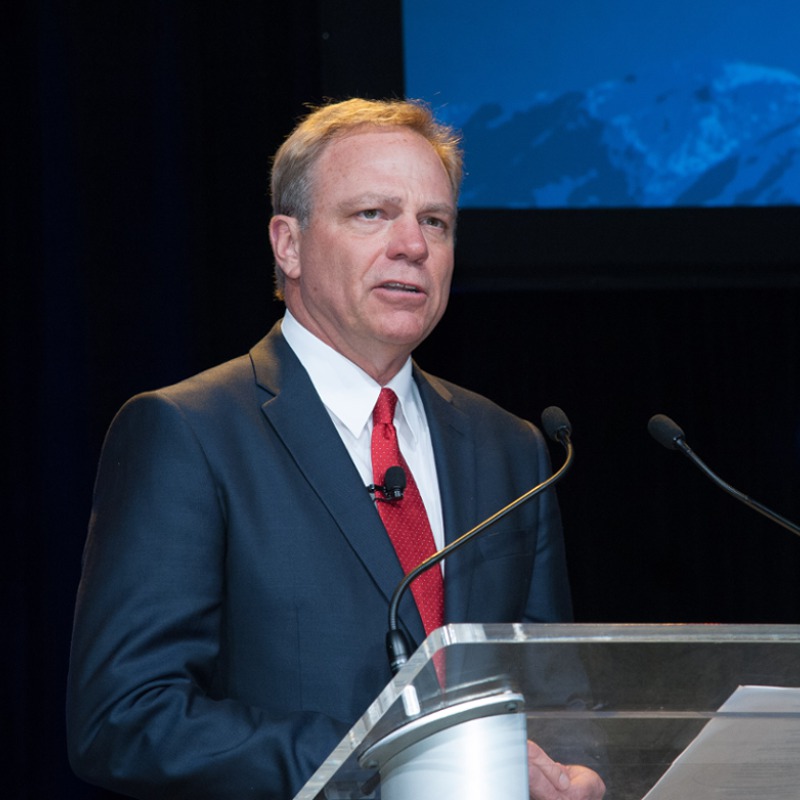
Lee F. Krystinik
Equus Energy Partners, LLC
American Association of Petroleum Geologists (AAPG) President · 2013–14
- Past President, SEPM (Society for Sedimentary Geology)
- AAPG Distinguished Lecturer — North America & Latin America
- Ph.D., Geology — Princeton University
USGS → Reservoirs Inc. → Union Pacific Resources Chief Geologist → ConocoPhillips Global Chief Geologist → Fossil Creek Resources (sold ~2014) → Equus Energy Partners
Clastic sedimentologist and stratigrapher who uses outcrop–subsurface integration to find oil and gas. Leads the Geology Field School Powder River week as sole instructor.
Field ops & safety
Christopher Oswalt
Field lead for Geology Field School — safety, logistics, and exclusive drone / photogrammetry so teaching stays on the rocks. Casper-based lodging and day-trip logistics designed for a better participant week than legacy competitor patterns.
Science
Science frame
Laboratory
The Powder River Basin exposes Upper Cretaceous tight-oil sandstones — Shannon, Sussex, Parkman, Teapot, Turner, Frontier — plus Niobrara and Mowry source / hybrid systems at walkable scale for stacked-bench development and transferable analogs.
Method
Each field day opens with a short conceptual lecture, then six-hour outcrop work aimed at one prediction or completion problem. Exclusive GFS drone models extend the same faces beyond the roadcut. Geo and eng stay in one conversation so you do not frack past geology.
Five learning outcomes
- Outcome 1 — Discriminate fringe vs core facies geometries in PRB tight-oil sandstones and state how that choice changes landing and completion design.
- Outcome 2 — Characterize enigmatic isolated shelf sandstone bodies (Shannon/Sussex-class) and predict lateral reservoir change at development scale.
- Outcome 3 — Evaluate synsedimentary tectonics and transgressive erosion as controls on Frontier–Wall Creek preservation and sweet-spot location.
- Outcome 4 — Integrate faulting and regional fracture patterns with stratigraphic architecture to anticipate parent–child interference in stacked benches.
- Outcome 5 — Contrast Niobrara vs Mowry (and tight-sand vs source-rock) systems to choose drill / complete strategies transferable to other basins.
Outline
Course outline (theme-level)
Public summary of day themes adapted from the industry-standard Powder River tight-oil field laboratory (competitor N463 day architecture). Stop minutiae and hotel names stay on ops docs. Overnight base: Casper — eastern-margin stops as day trips; we do not overnight Newcastle.
Arrive
Sunday — Casper assemble · basin introField core
Mon–Fri — Niobrara/Mesaverde · Shannon/Sussex · Frontier/Mowry · eastern margin day trip · Turner wrapDepart
Saturday — depart CasperSunday · Arrive
Casper reception and Powder River petroleum-system overview — stacked benches, source rocks, and why geo/eng share one model.
Monday · Niobrara + upper Mesaverde
Niobrara marls; Teapot and Parkman shoreface–deltaic successions, unconformity and valley fill — landing and eng issues on outcrop (outcomes 1 & 5).
Tuesday · Isolated shelf sands
Shannon and Sussex body variability in Frontier / Mowry / Niobrara economic context — enigmatic isolated reservoirs and lateral change (outcome 2).
Wednesday · Mowry + Frontier
Frontier, Niobrara, and Mowry contrast — different reservoir behavior means different drill and complete choices (outcomes 3 & 5).
Thursday · Eastern margin day trip
Casper out-and-back toward Douglas / Redbird facies change — where to drill and how to complete as systems change basinward (outcomes 3 & 5). Return to Casper; no Newcastle overnight.
Friday · Turner + wrap
Turner complexity, Mowry/Niobrara ties, trend analysis / basinal transport, and a subsurface exercise that locks the shared geo/eng story (outcomes 1 & 4).
Amenities
What’s included (high level)
- Instruction with Lee F. Krystinik
- Field ops & safety lead (Christopher Oswalt)
- Exclusive drone / photogrammetry models for participants
- Lodging in Casper (or better), ground transport, and meals — package detail TBD before live fee card; eastern-margin faces run as day trips
- Not included (typical GFS): airfare; confirm unhosted meals when package locks
Technical tease
Field data & models
Exclusive GFS drone / photogrammetry for Powder River teaching faces will be curated onto the participant Digital Field Atlas as datasets lock. Full interactive map stays on the ops page — public page gets stills / short reel once Brand clears assets.
Next step
Register interest
Dates are not live yet. Email for open enrollment interest or a company block week with Lee.